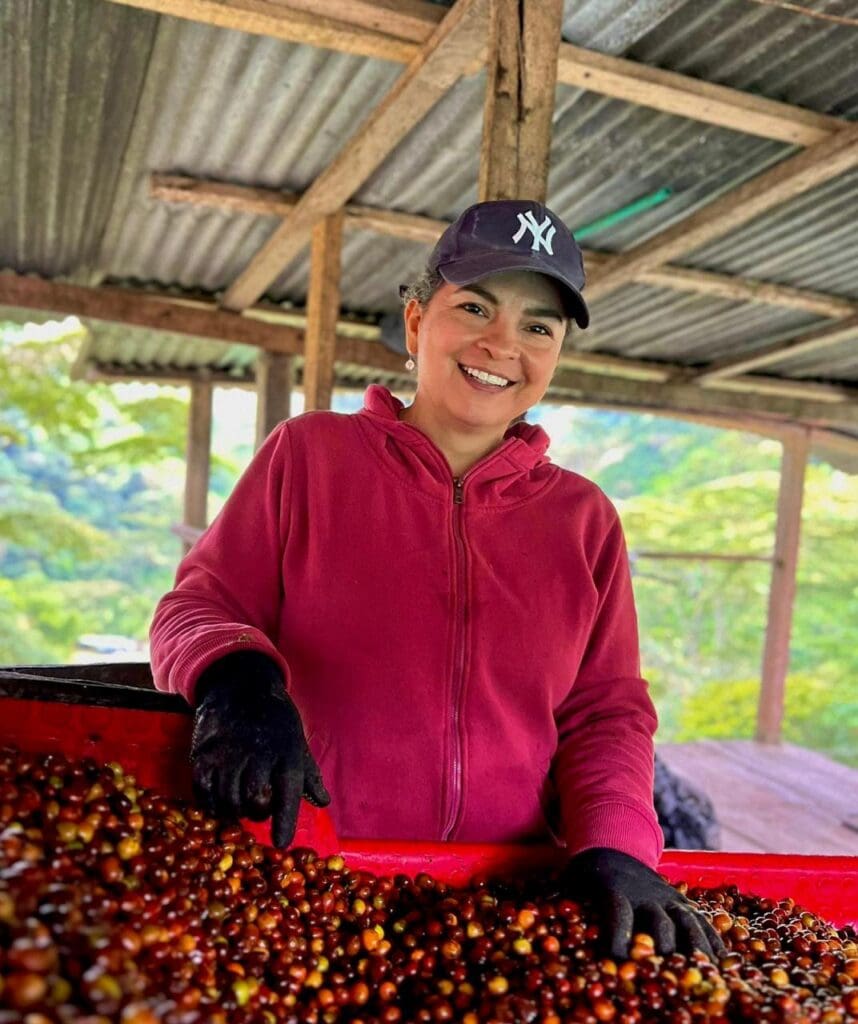
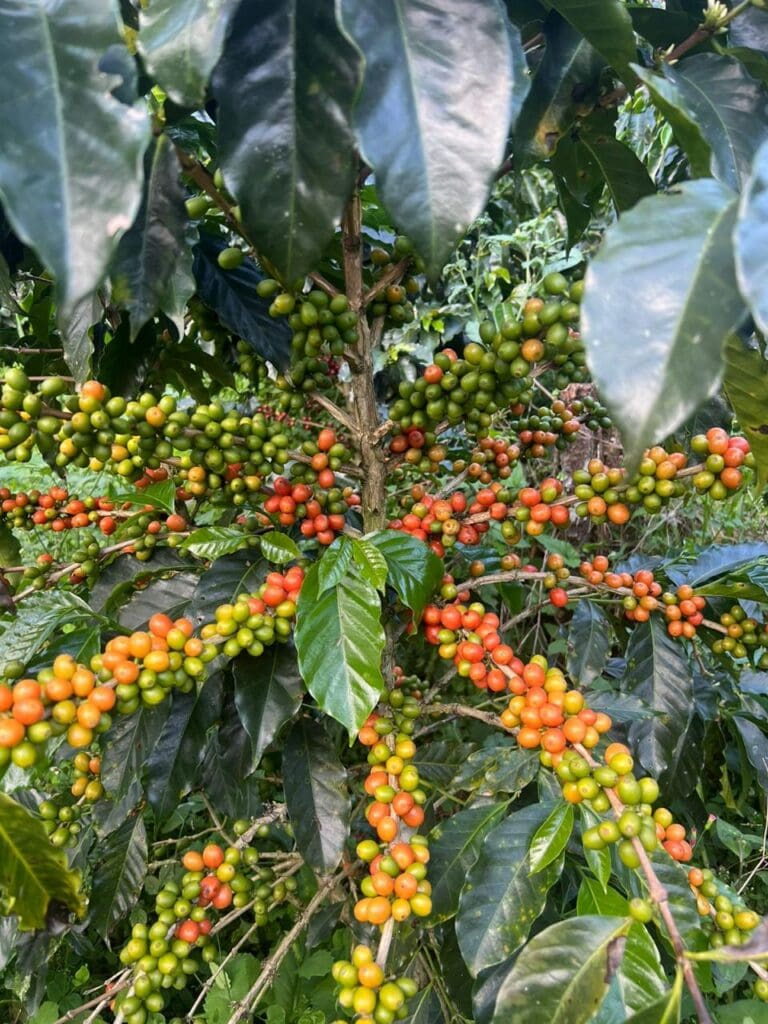
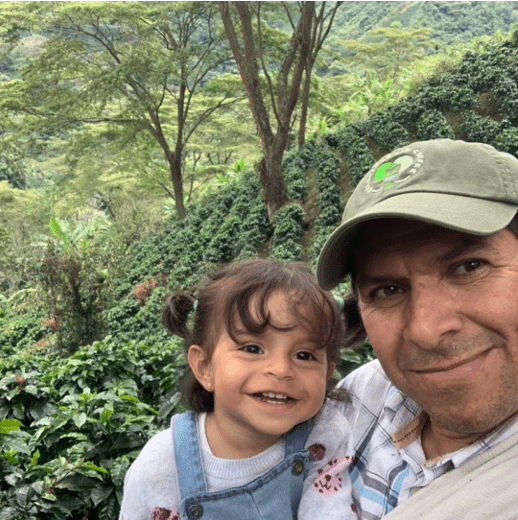
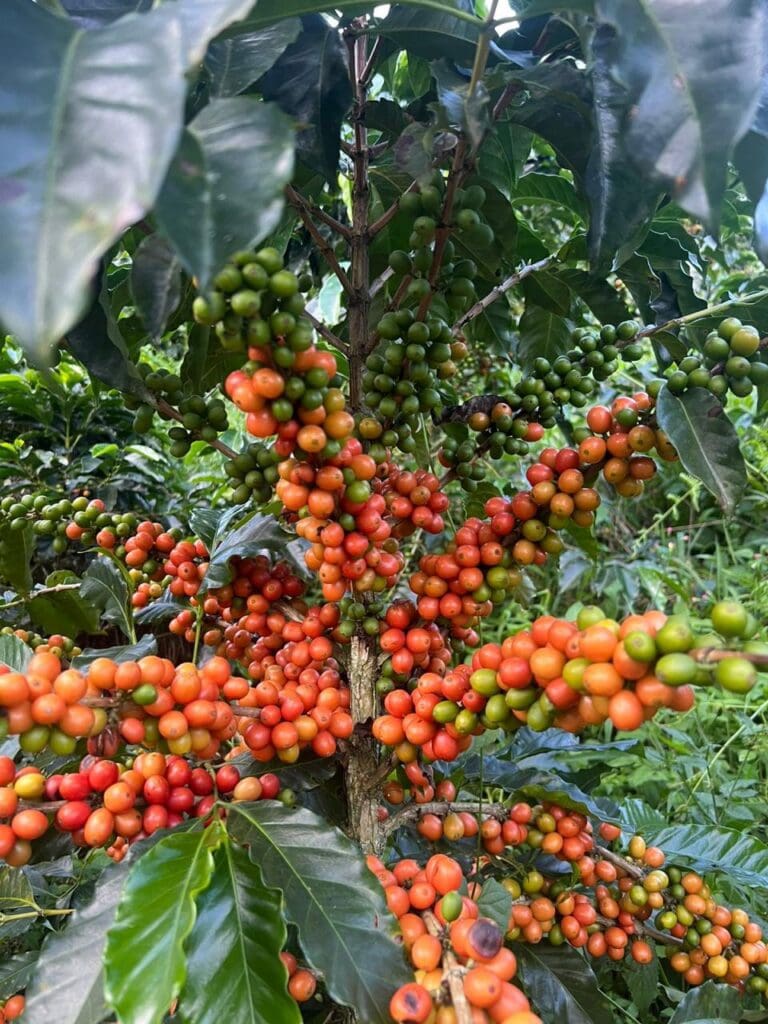
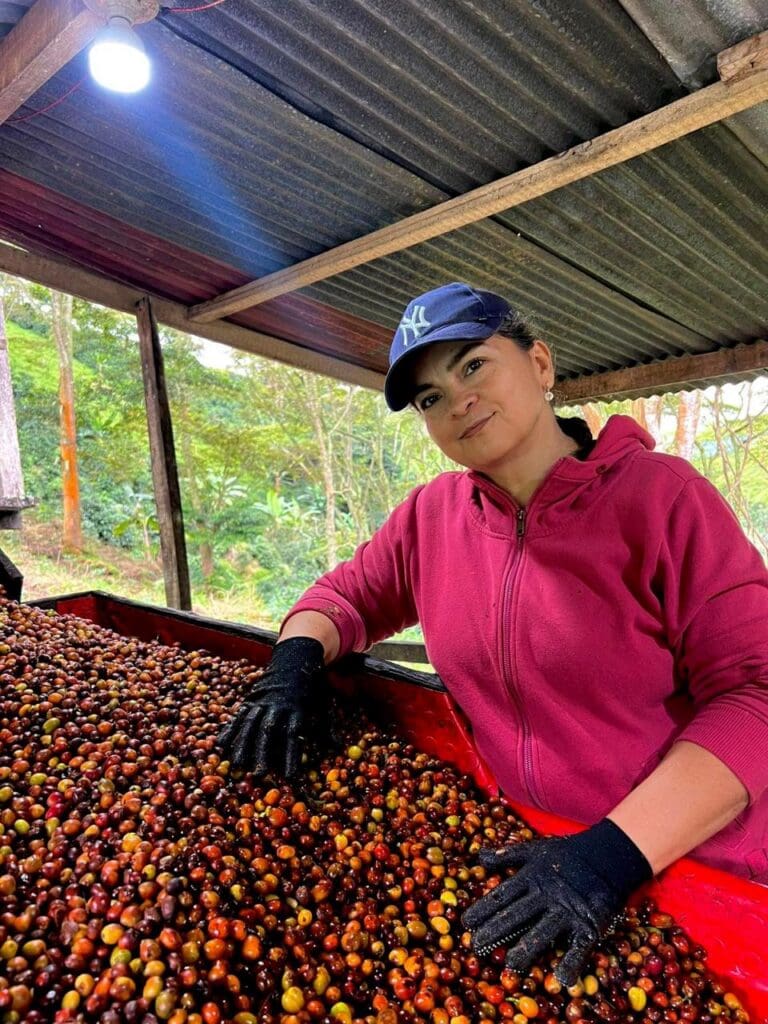
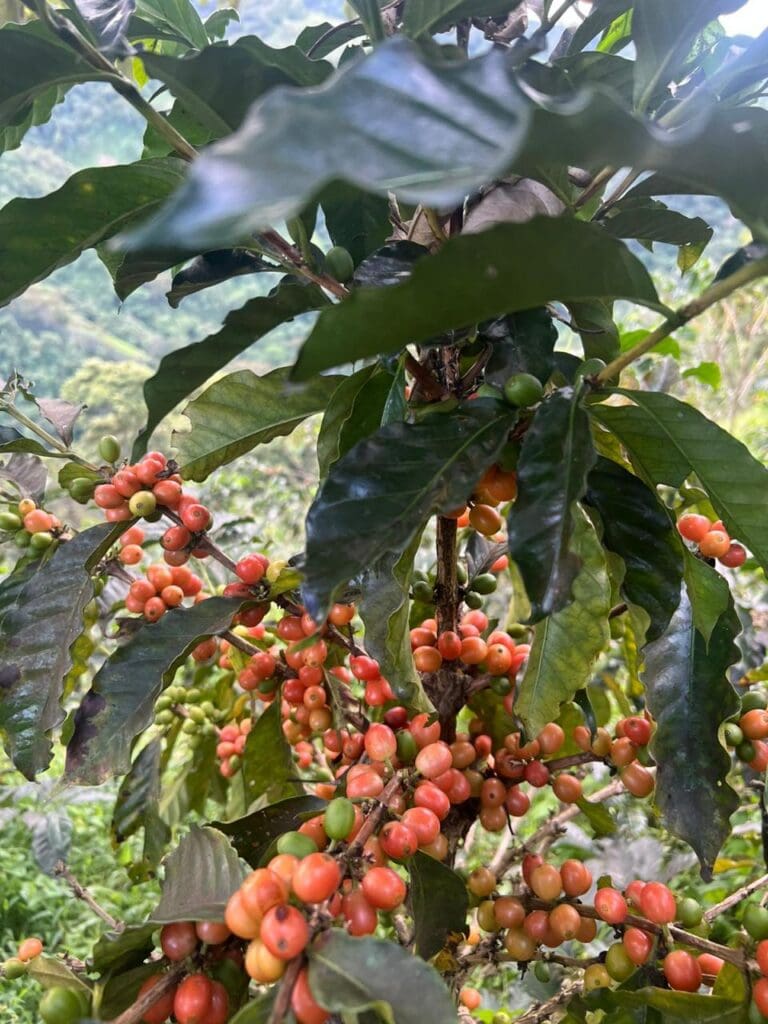
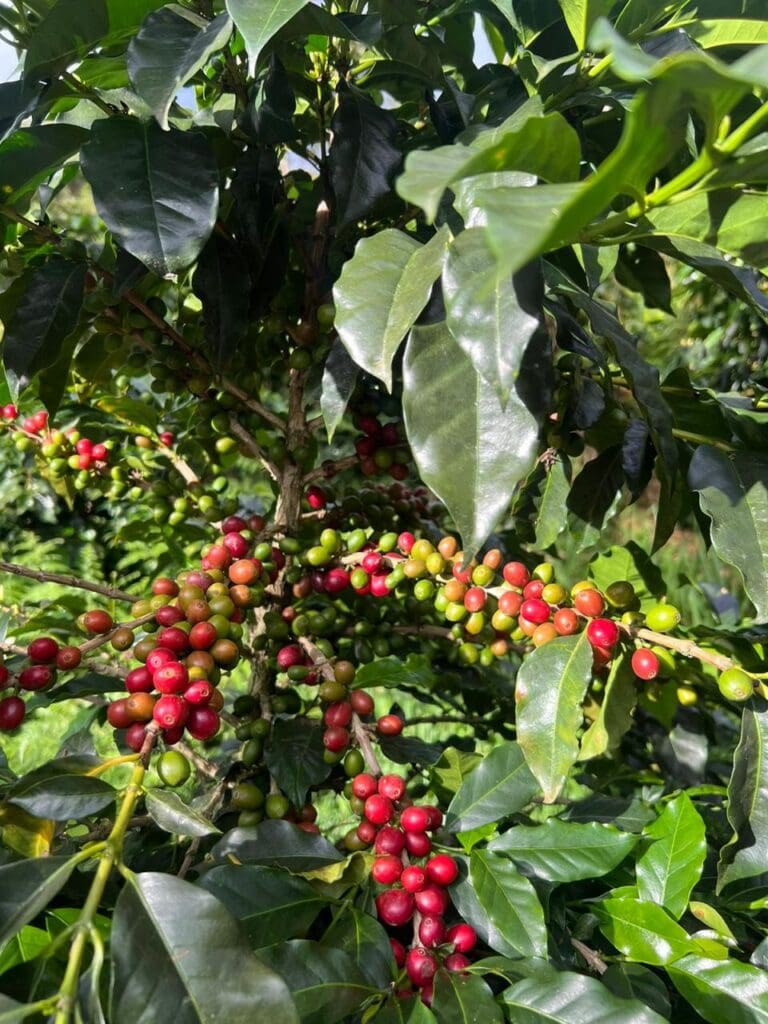
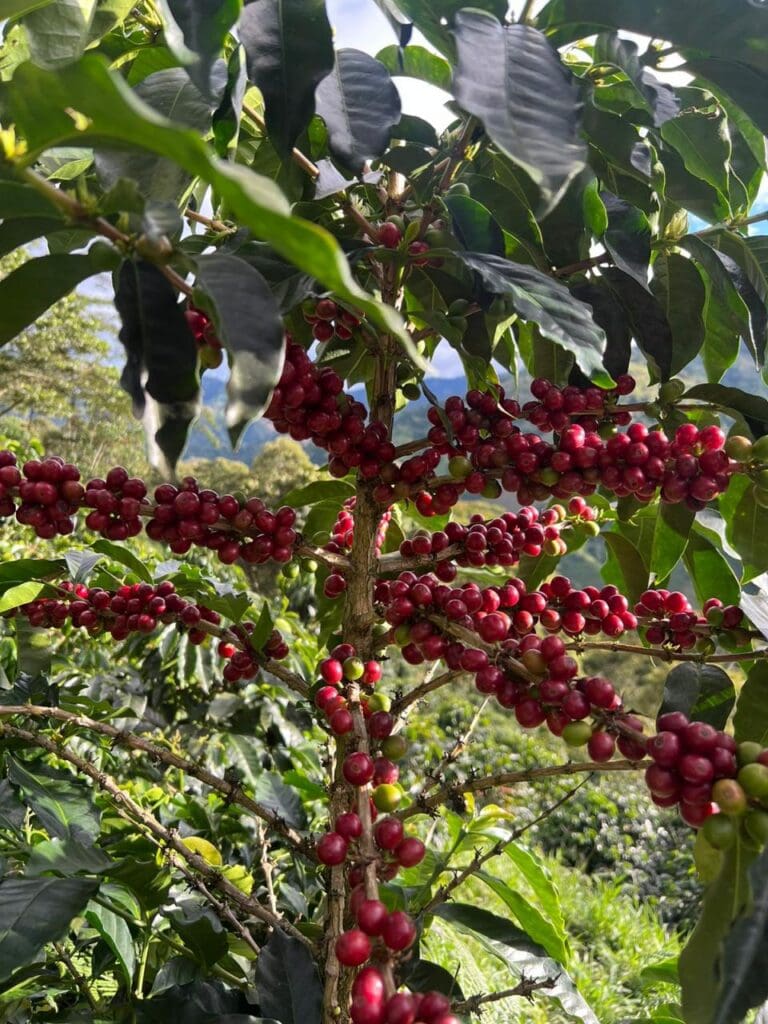
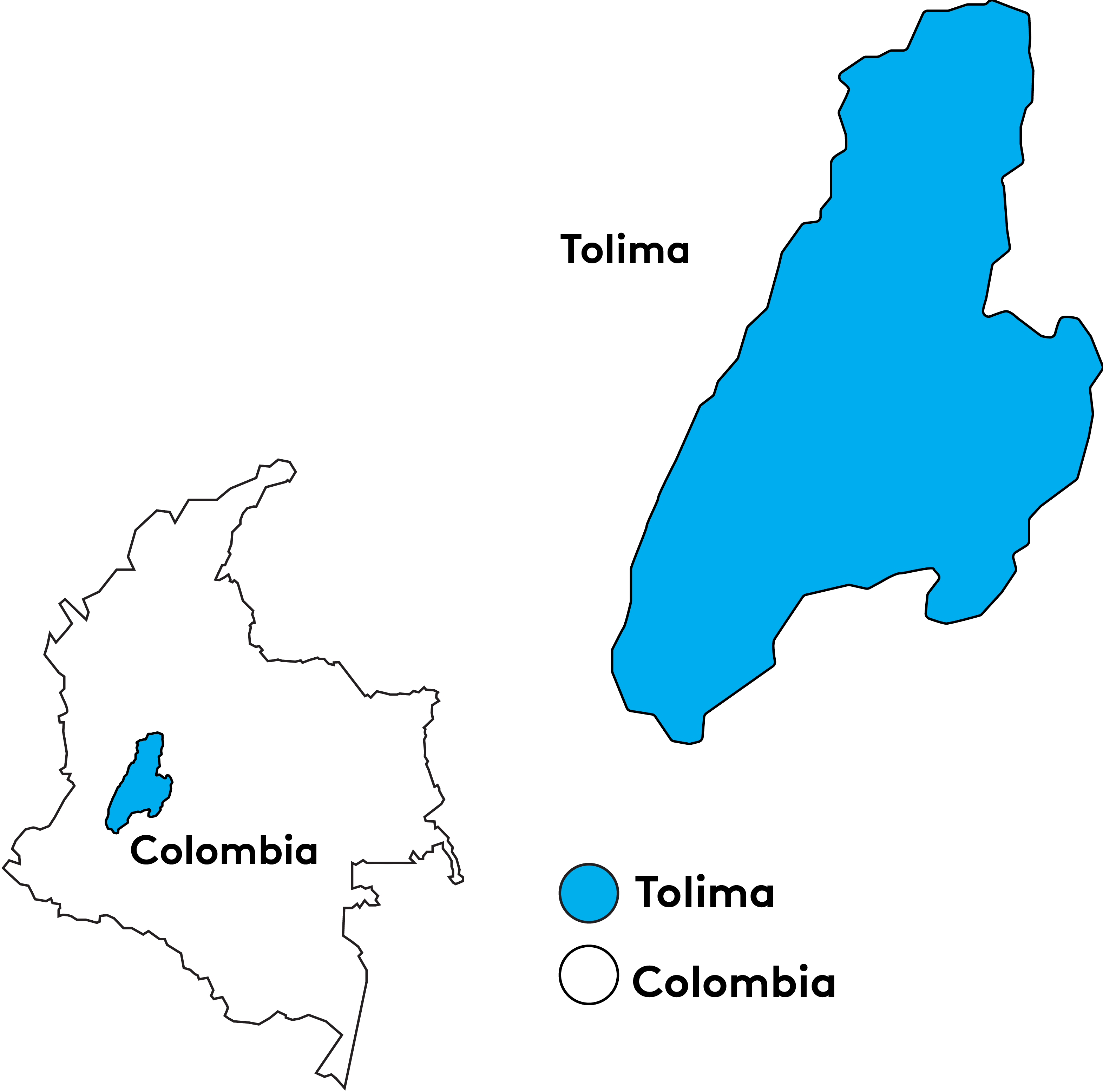
El Triunfo is a family-owned coffee farm located in Planadas, Tolima, managed by Camilo Enciso and Adriana María Franco. The Enciso Franco family has owned the farm since June 2014, cultivating 10 hectares between 1,850 and 1,950 meters above sea level, with a strong focus on specialty and single variety lots.
Adriana María Franco has dedicated more than a decade to the production of specialty and exotic coffees, approaching coffee as a combination of agriculture, science, sensory exploration, and cultural expression. From El Triunfo, she leads the agronomic and post-harvest development of the farm, working with high-value varieties such as Pink Bourbon, Gesha, Tabi, and Wush Wush. Her work is defined by careful farm management, sustainable practices, and continuous experimentation with fermentation and drying protocols to produce clean, expressive microlots with defined acidity, sweetness, and aromatic complexity.
Camilo Enciso represents a new generation of producers in Southern Tolima, committed to quality, traceability, and regional development. In parallel to his work at El Triunfo, he serves as General Manager of ASOPEP, one of the most active producer associations in Planadas, where he promotes collaboration, market access, and professionalization among smallholders. His leadership has contributed to increased visibility for Planadas in national coffee events and specialty markets.
Together, Camilo and Adriana have positioned El Triunfo as a project rooted in technical rigor, long-term vision, and a strong connection to its territory. Their coffees express the high-altitude conditions of Tolima through fruit-forward profiles, structure, and clarity, while reflecting a shared commitment to community, sustainability, and the evolving identity of Colombian specialty coffee.
This Bourbon lot underwent Natural process. Cherries were harvested selectively at optimal ripeness and floated in water channels to remove low-density fruit. Without depulping, the entire cherry was fermented in aerobic conditions, allowing the natural yeasts present in the fruit to initiate fermentation. Controlled drying took place on raised beds over several days, ensuring uniform exposure and gradual moisture reduction. The slow drying curve preserves fruit complexity and bright acidity, strengthening the sensory identity of the Bourbon variety.
Meticulous sorting before and after drying guarantees uniformity, while a final resting period stabilizes humidity before milling and export.