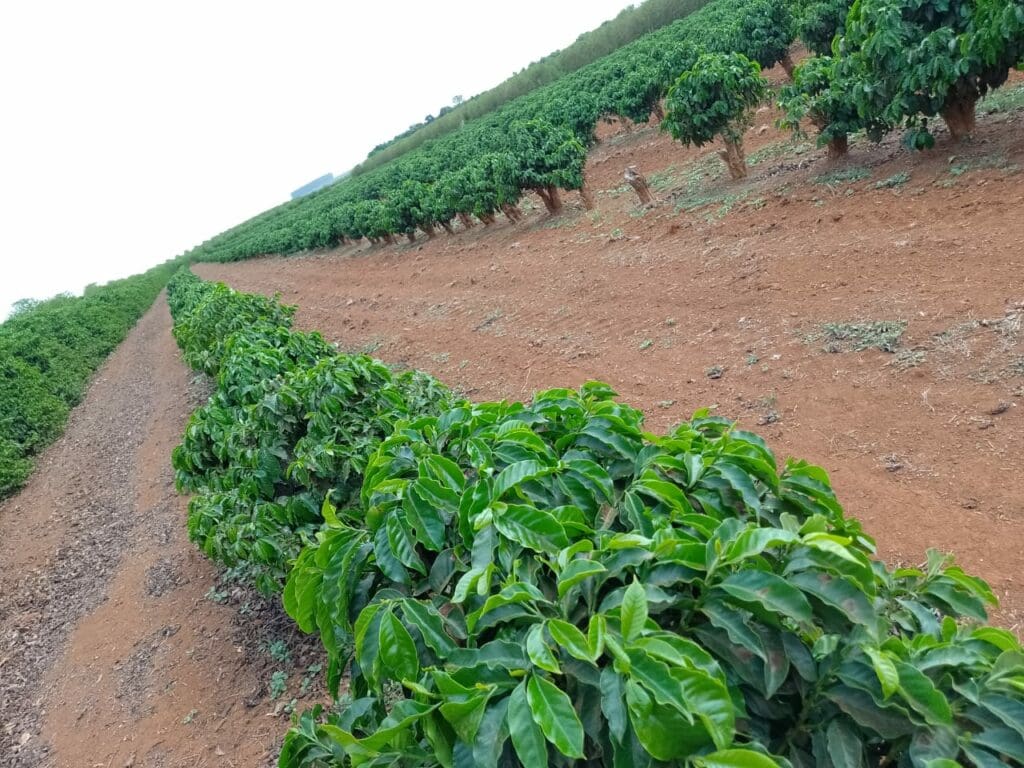
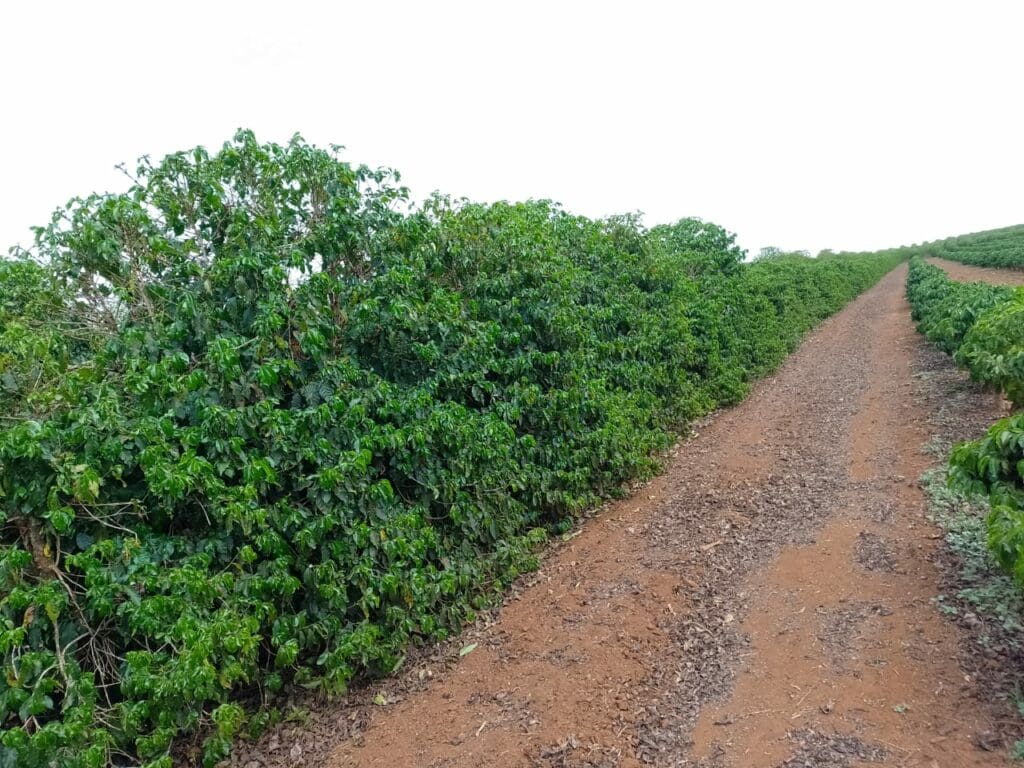
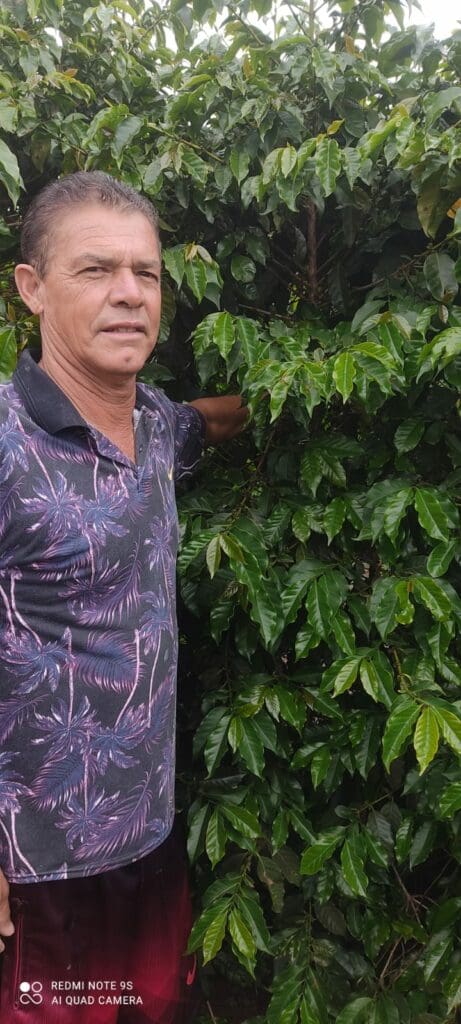
Valdir Eugênio de Souza has produced coffee since 1995, following in the tradition of his family’s generations. His farm, Fazenda Chapadão de Ferro lugar Lagoa, is a true example of a family-run business, with every family member playing a vital role in all of the stages involved in coffee cultivation.
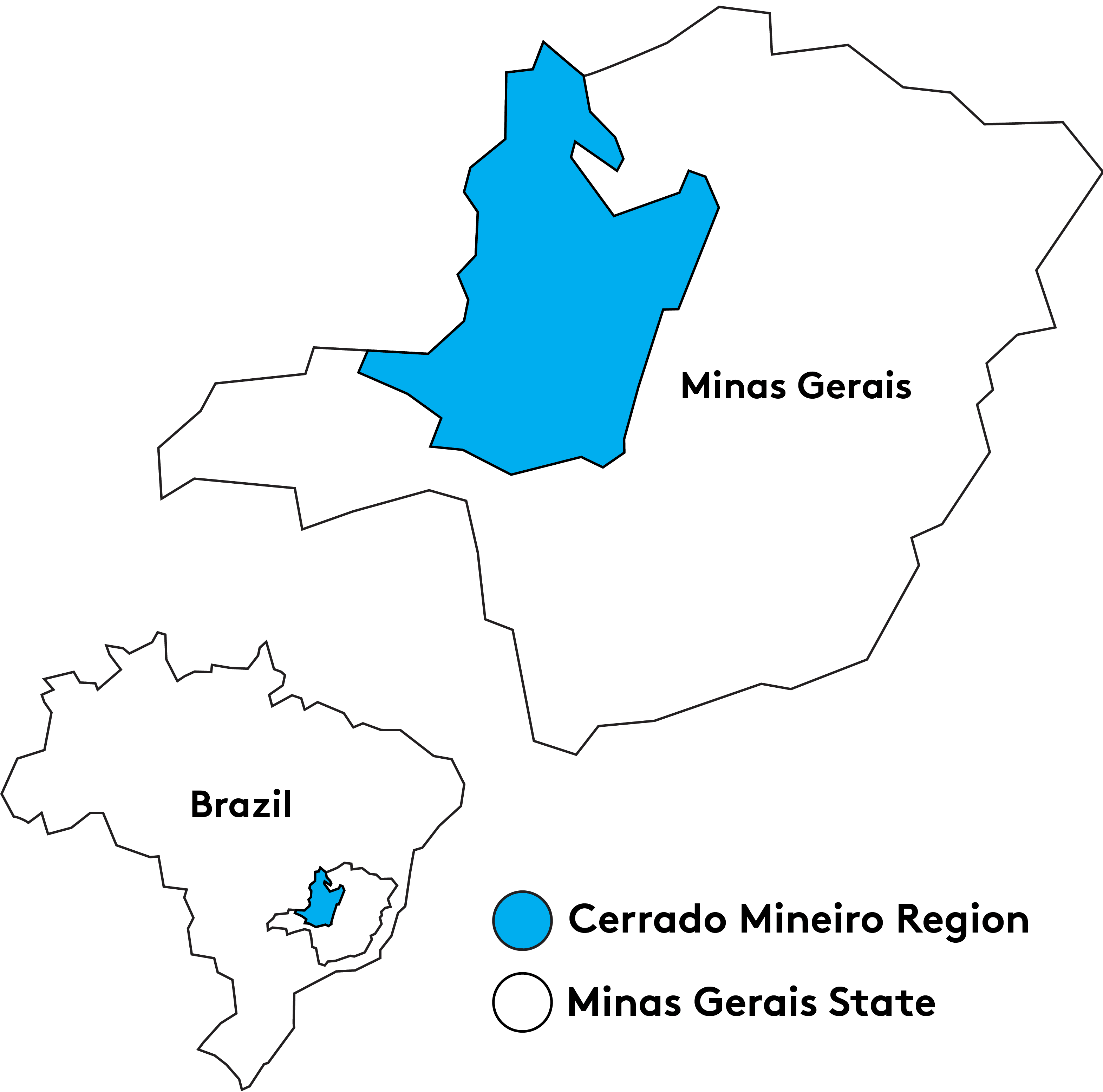
Valdir Eugênio’s farm is located in Chapadão de Ferro, an area considered by some to be a privileged coffee growing region. Within Cerrado, there are many microregions that present unique characteristics in the cup. The Chapadão de Ferro microregion is a small town with farms situated around the cone of a partially formed volcano. Farms here are at higher elevations above 1100 meters and coffee is harvested a month or two later than in other parts of Cerrado Mineiro.
To ensure quality, Valdir Eugênio employs good practices at every step. He carefully manages each plot to guarantee that every action is executed with skill. He insists on only harvesting ripe cherries, and drying them slowly and evenly on his drying patios. He uses both “volcano” drying, in which cherries are piled into pyramid shapes resembling volcanos, as well as spreading cherries into thick layers, resulting in efficient drying.
Valdir Eugênio says that his coffee journey is not just about growing coffee but about preserving a tradition, honoring the land, and producing a cup of coffee that is a true celebration of flavor and quality. His tireless dedication is a tribute to his love for coffee and his family’s legacy of experience, passion, and commitment to excellence in coffee farming.
This lot of Mundo Novo coffee underwent Natural processing. Mundo Novo is the product of a natural cross between Sumatra and Red Bourbon, discovered in the municipality of Mineiros do Tietê, São Paulo in 1943. Seeds from one of these trees were planted in the municipality of Mundo Novo, now called Urupês, in Sao Paulo state. Various lines of the plant were cultivated here, undergoing selection for positive characteristics. The results of this cultivation were finally distributed to farmers beginning in 1952, with new selections by the IAC (Agronomic Institute of Campinas) beginning in 1977.