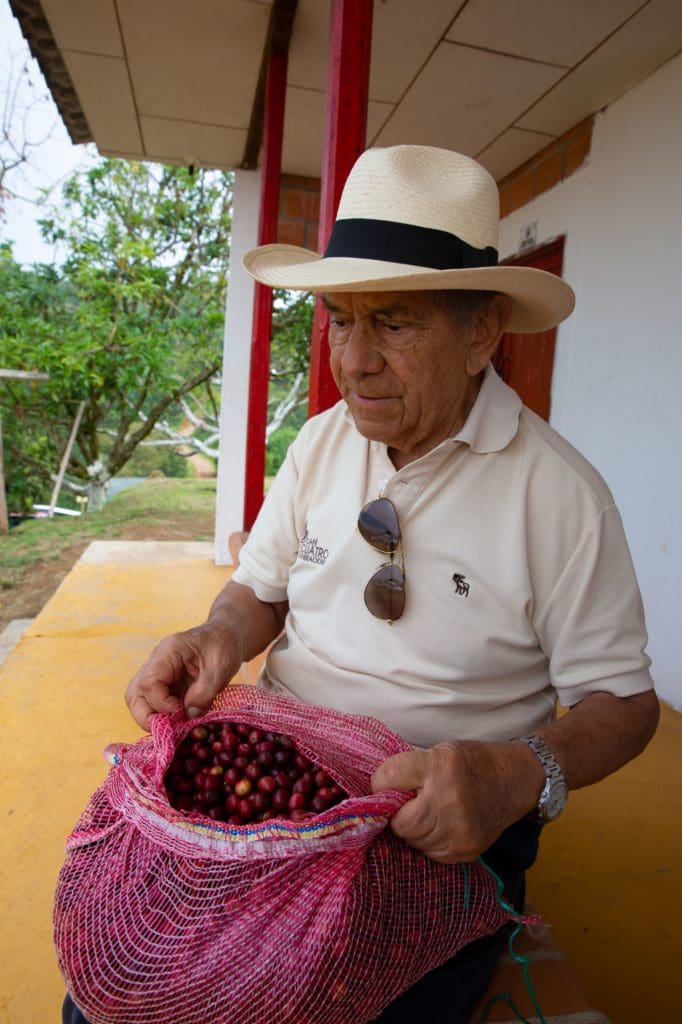
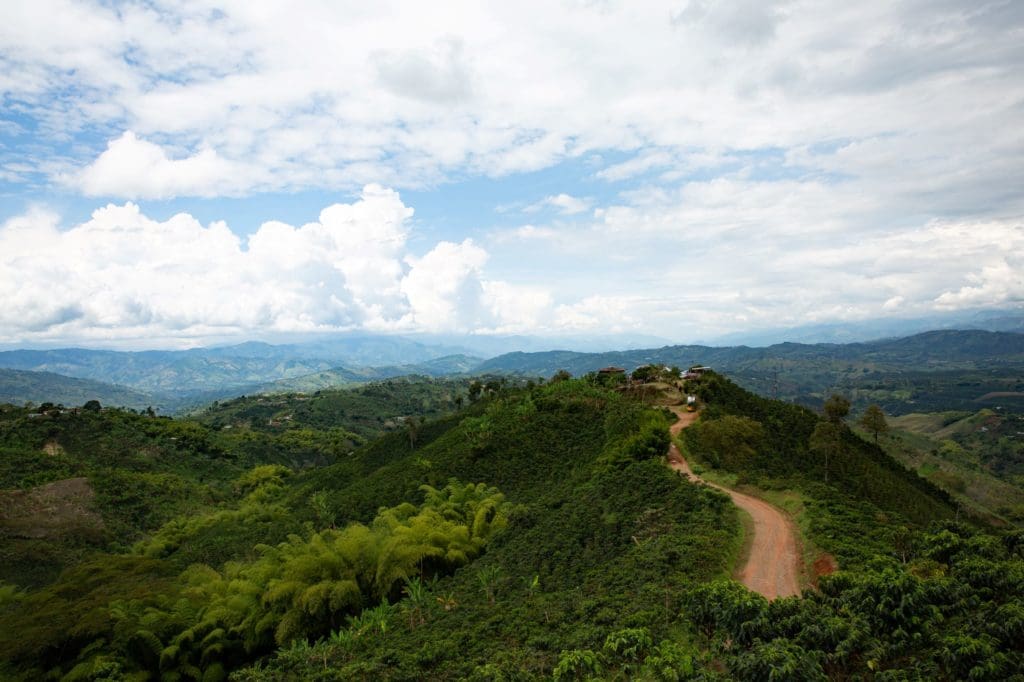
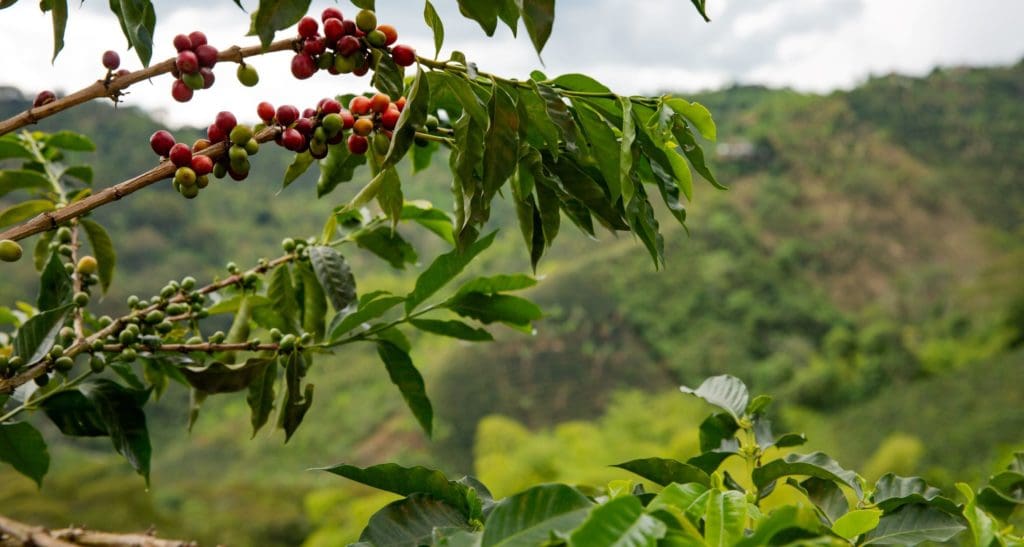
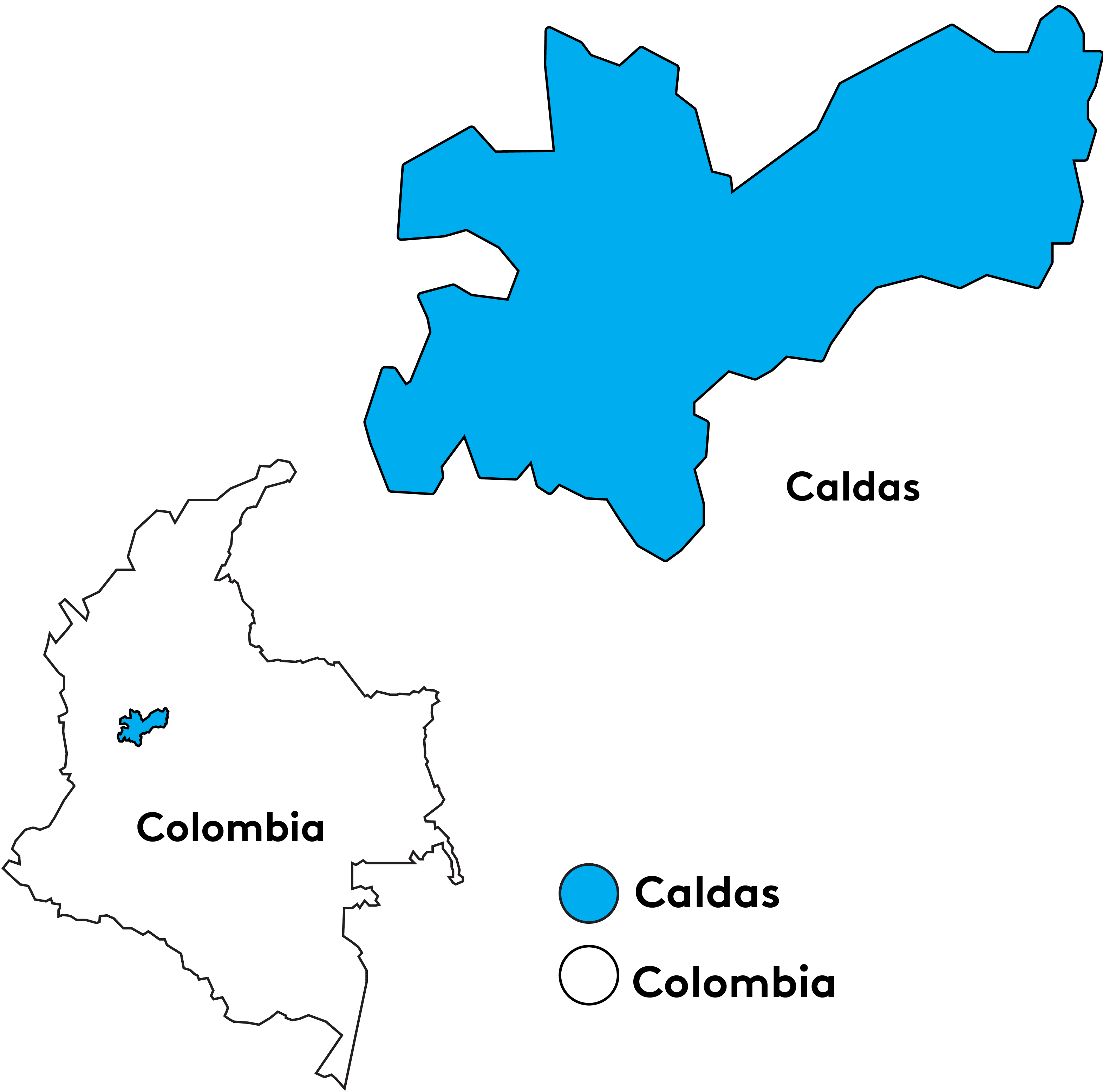
The Valdes family of Caldas, Colombia has been producing coffee for four generations. Today, overseen by Luis Jose Valdes, the family grows coffee across three properties in Caldas under the brand Café Cuatro Generaciones, named for the family’s long history in the trade. The farms—Parana, La Cristalina, and San Pablo—are highly technified properties, planted with a total of 421,000 trees.
Both San Pablo and La Cristalina were purchased in 2006, adding to the Parana farmland which has been owned by the Valdes family for more than 100 years. Today, the family maintains a focus on the environment and supporting biodiversity. Coffee is washed and depulped at the ecological mill, where coffee pulp is placed into compost treatment to be converted to organic fertilizer for the coffee trees. The farms also include various types of trees to shade the coffee plants. Many of these tree species—including walnut, red cedar, and guava—act as habitats for many types of birds around the farm. They also plant black cedar trees, a tree at risk of extinction, from its own nursery on the farm.
This blend from La Cristalina and San Pablo underwent Natural processing. Cherries are first sorted to remove defects after harvest. Then, the coffee is fermented in the open air for 24 hours at temperatures from 14–16 °C. Next, fermented cherries are dried for 20–25 days in a mechanical dryer at temperatures between 30–35 °C. Dried cherries are sorted one more time to ensure quality prior to being milled and packed for shipment.