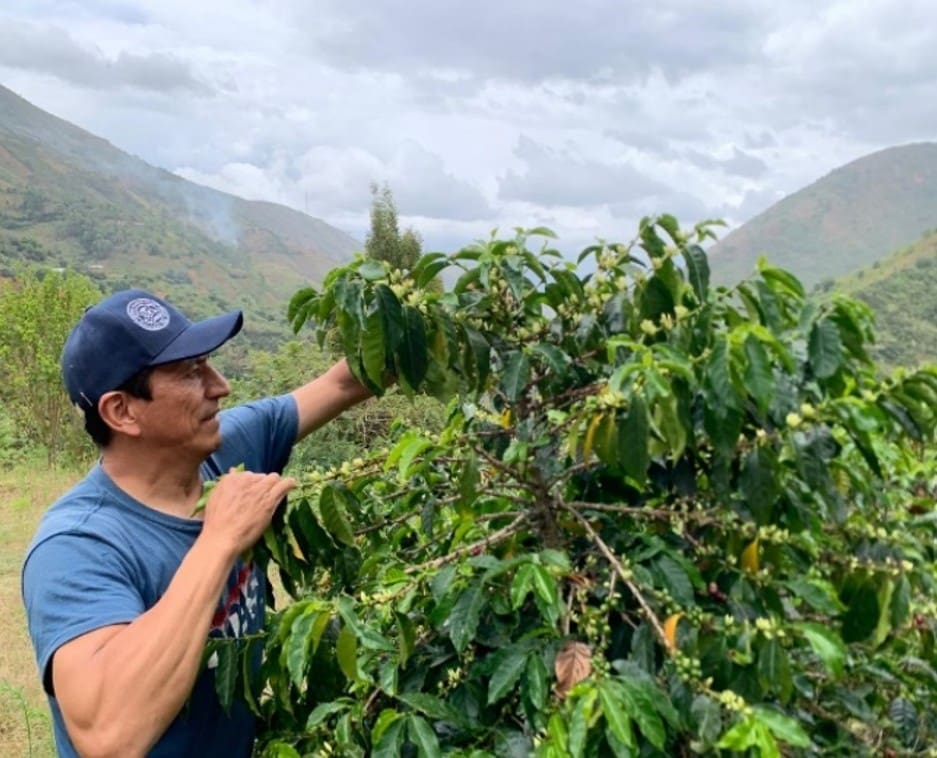
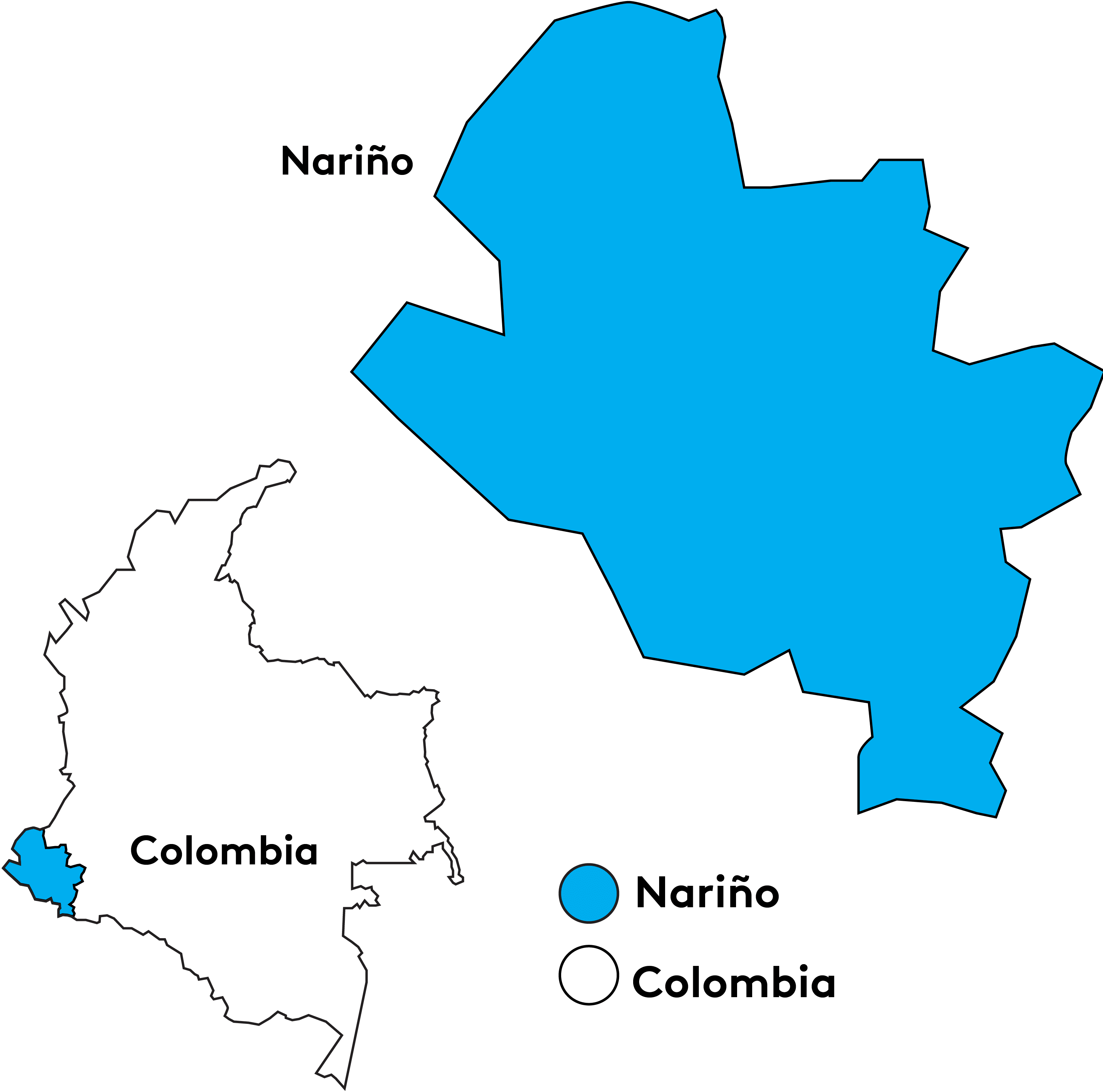
La María Farm is located in northern Nariño, approximately 40 km from the city of Pasto, in Colombia’s Central Andean range—an area known for its strategic location and favorable conditions for high-altitude agriculture.
Libardo López is a second-generation coffee producer with more than 20 years of experience in coffee farming. Before fully committing to agriculture, he worked as a civil works inspector, a role that kept him away from his land and family. Around ten years ago, influenced by his father and father-in-law—both recognized for producing high-quality coffees and for their strong performance in national competitions—Libardo decided to return permanently to his territory. Inspired by this legacy, he and his wife and children began their path in specialty coffee production.
Today, Libardo manages La María and La Cruz farms, located along the road to San Ignacio, about 5 km from the town center of Buesaco. Together, the properties cover nearly 2 hectares and are primarily planted with Castillo, Colombia, and Caturra. The farm is composed of the La Cruz and El Mirador plots, divided into several lots, including Los Mandarinos and El Estoraque. In addition to the main varieties, there are small plantings of Geisha, Pink Bourbon, and Bourbon Sidra. This year, papayo was also introduced, further diversifying the farm’s productive system.
Libardo’s first participation in a specialty coffee competition placed him in the top 20, an achievement that encouraged ongoing improvement. Since then, he has received notable recognition, including a Presidential Award for a blend of Castillo, Colombia, and Caturra. More recently, he secured 9th place at a regional fair with a Bourbon Sidra lot.