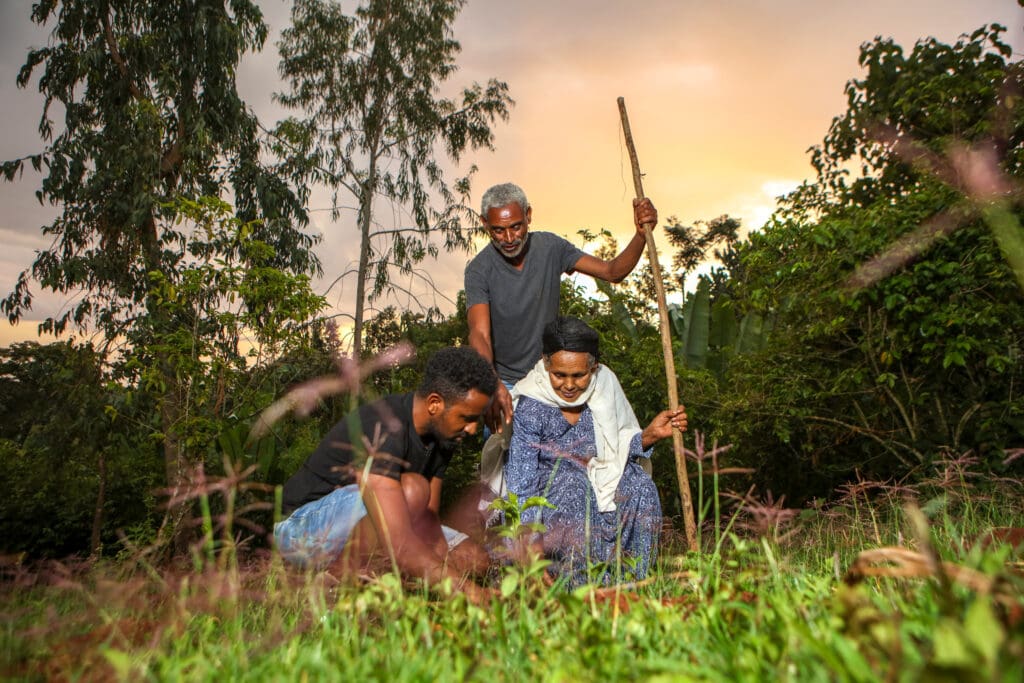
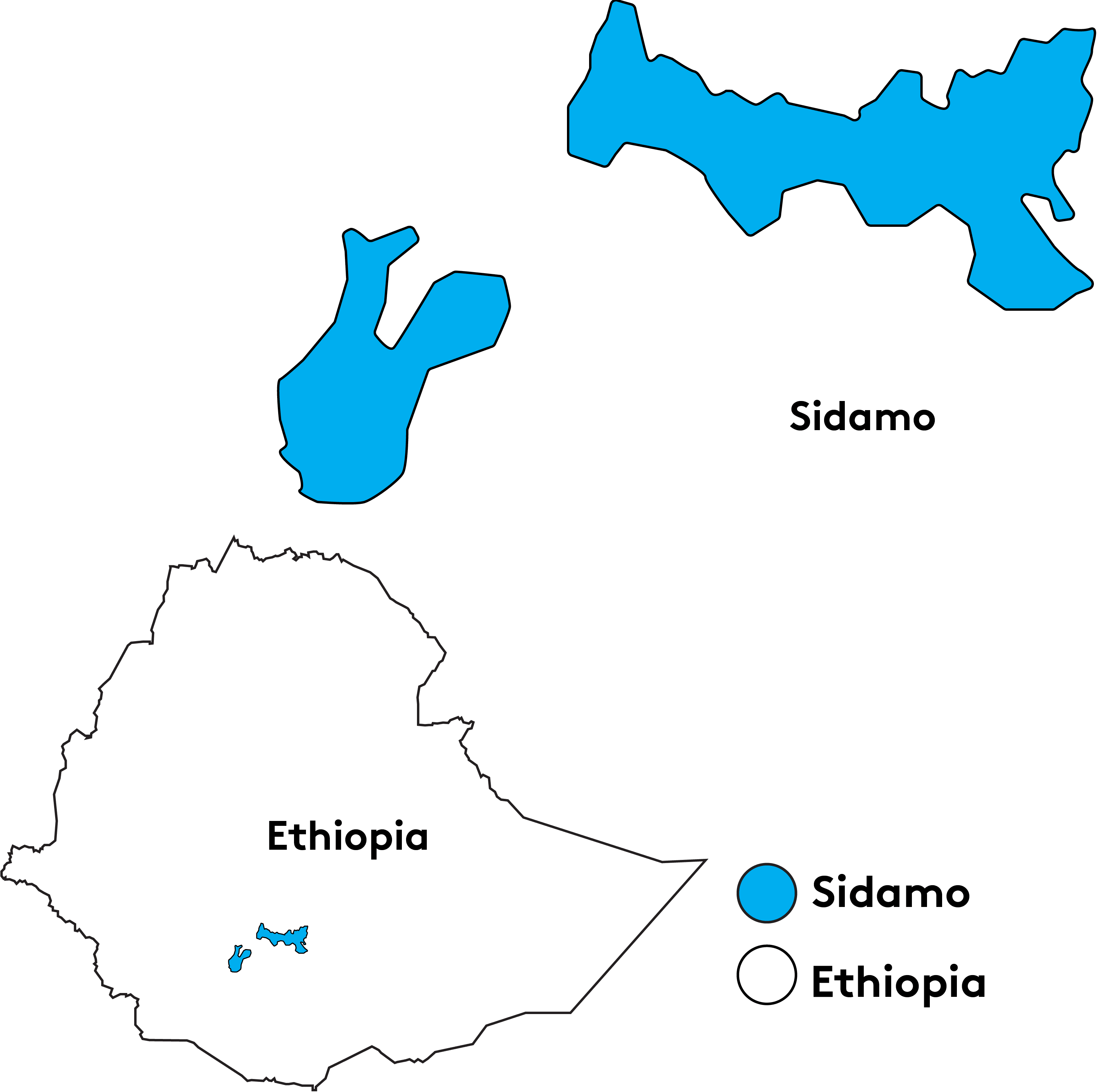
This coffee comes from the community of Taferi Kela in Sidamo, Ethiopia, and is processed by Bette Buna, short for “House of Coffee.” The company’s roots in the village began when Dawit and Hester were entrusted by Dawit’s grandparents, Syoum and Emame, with not only the family farm but also the responsibility of supporting the local community.
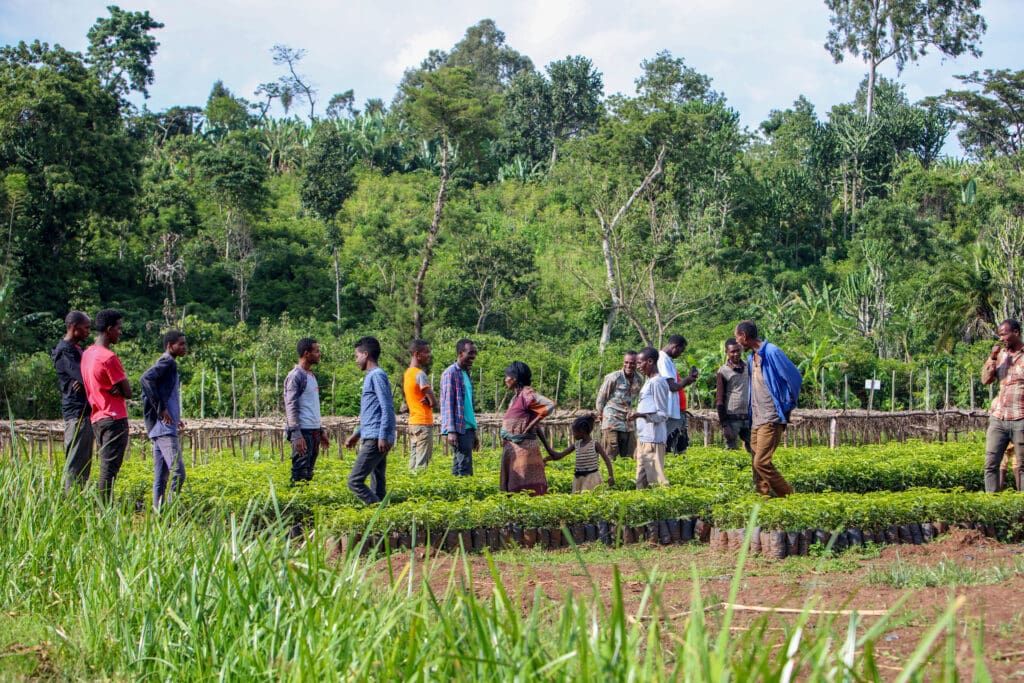
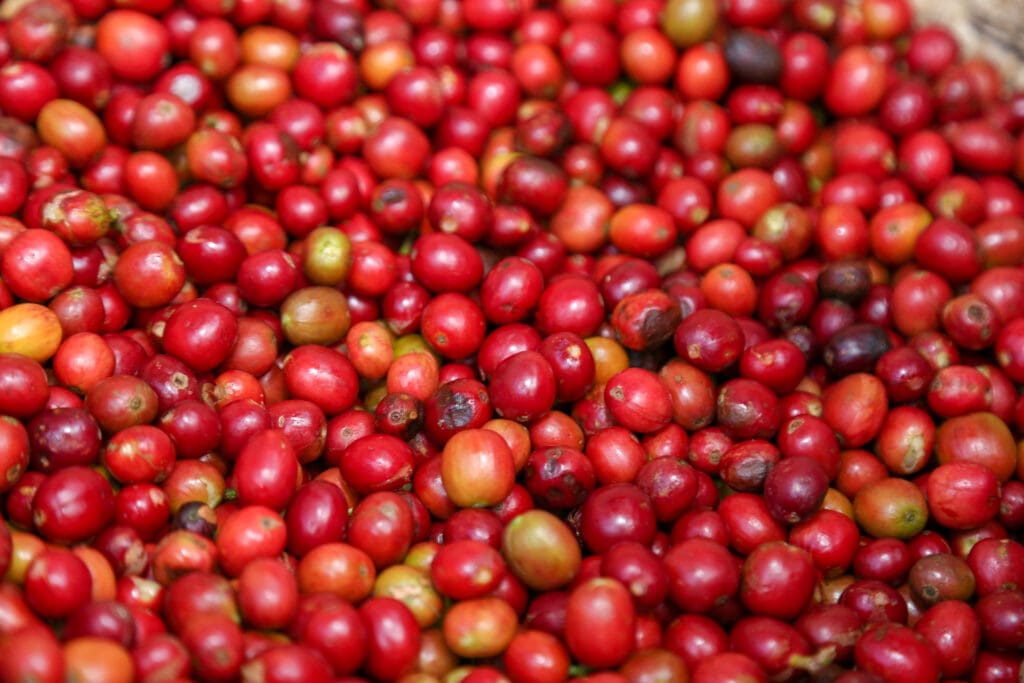
Although Taferi Kela lies within the same mountain range as better-known Sidama coffee areas, it has long been overlooked, with no other industries present. Bette Buna has worked to change this by creating economic opportunities through coffee, teaching farmers sustainable agricultural practices, promoting agroforestry, and ensuring careful harvesting of ripe cherries to increase both quality and income. Every year, they distribute more than 350,000 climate-adapted seedlings from their in-house nursery, helping to generate significant long-term income for farmers in a region where household earnings are typically less than $50 per month.
Bette Buna is also recognized for its inclusive employment practices, offering jobs to people with disabilities, single mothers, and other underrepresented groups. Their transparent supply chain traces each lot back to the individuals who picked, processed, and milled the coffee, ensuring fair wages and full accountability.
This lot was grown by community farmers in Taferi Kela and processed by Bette Buna at their washing station. The coffee underwent an anaerobic honey process that, interestingly, presents a clean and structured profile similar to a washed coffee.
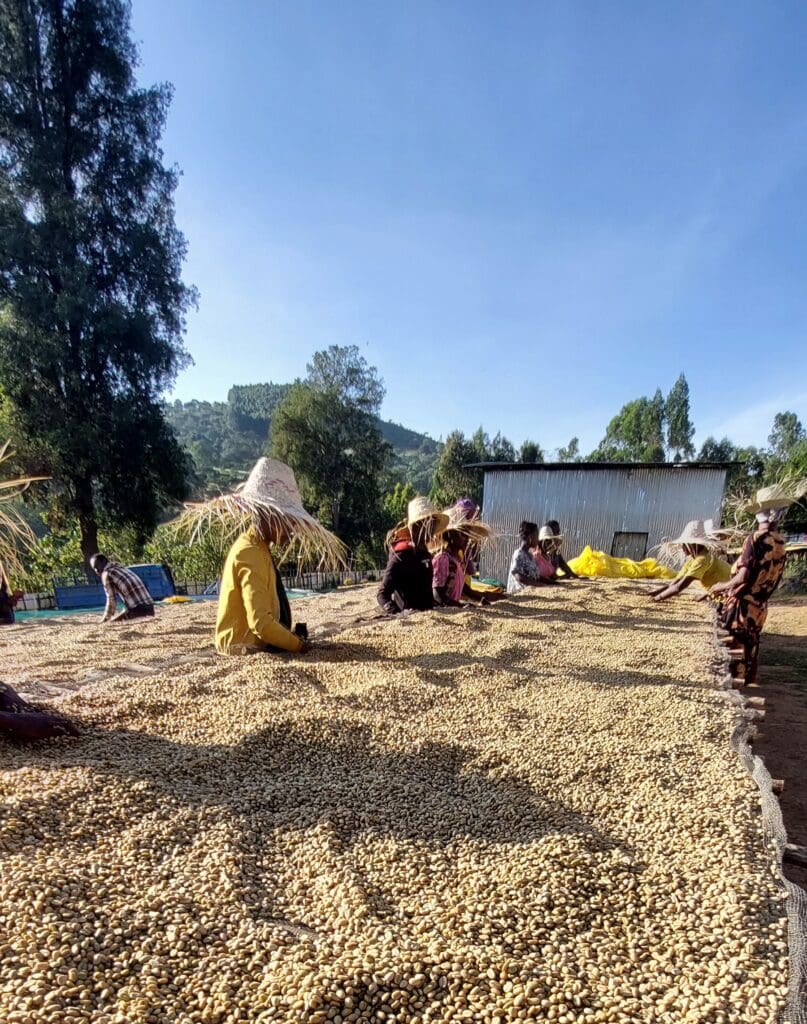
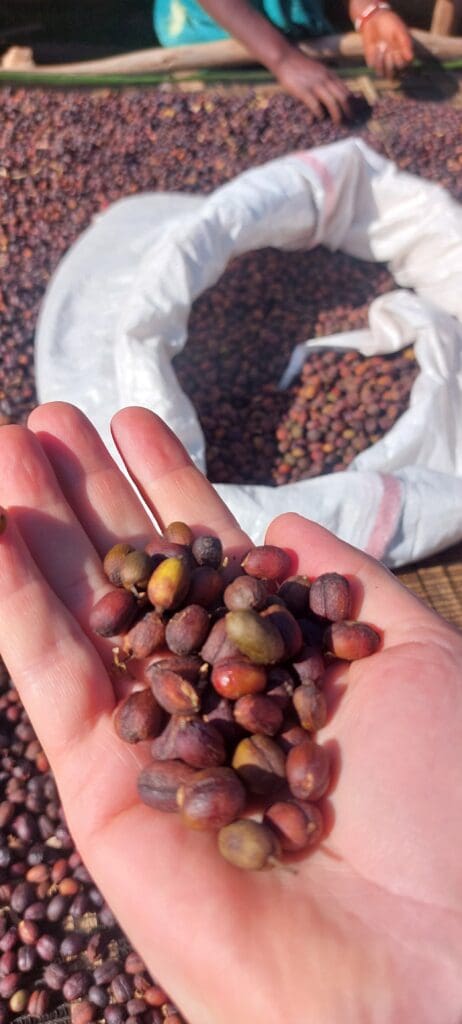
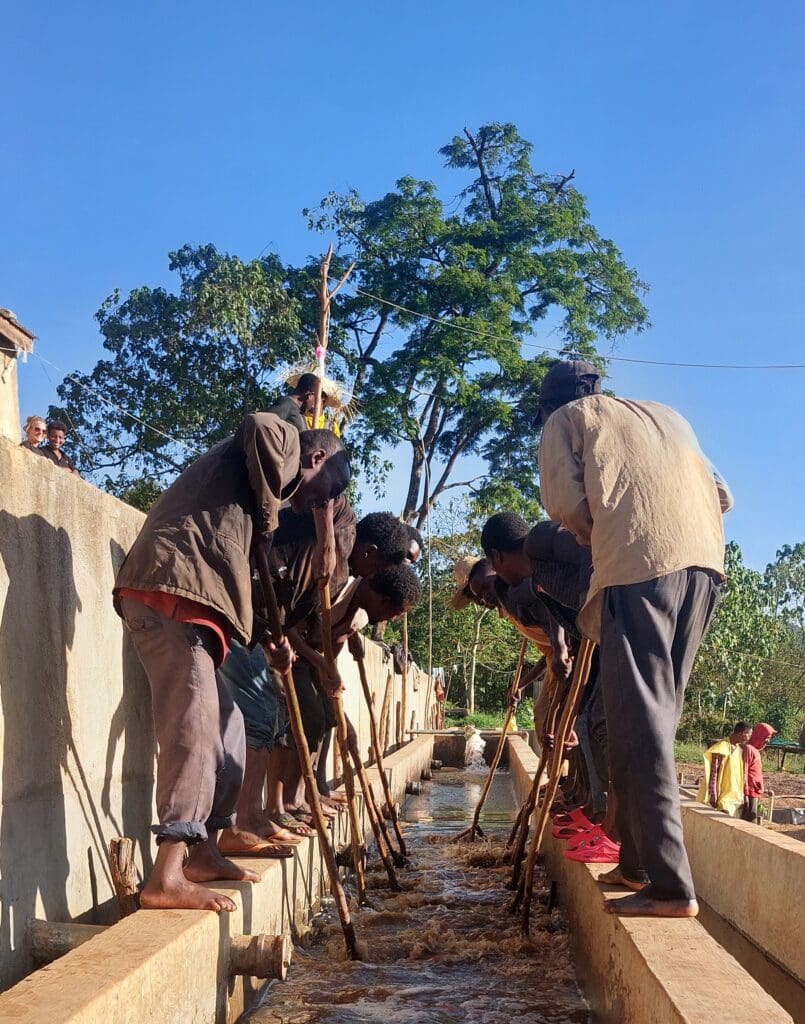
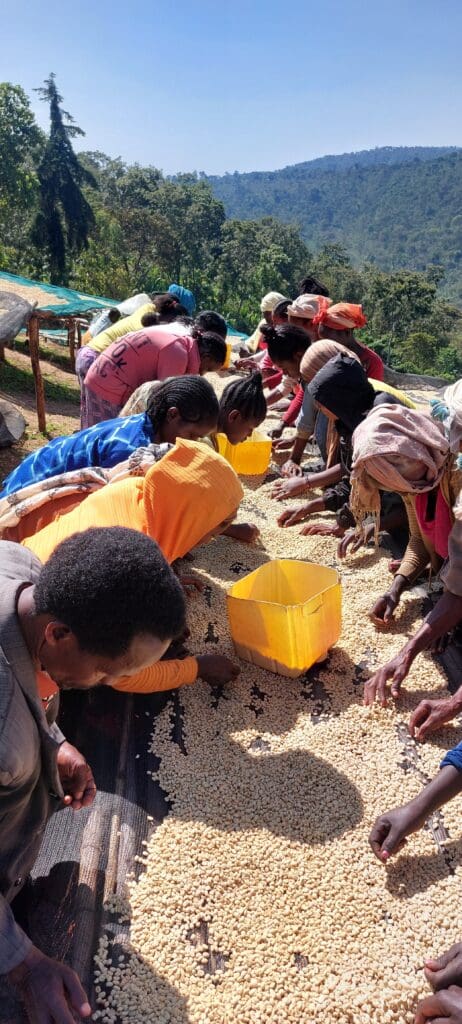
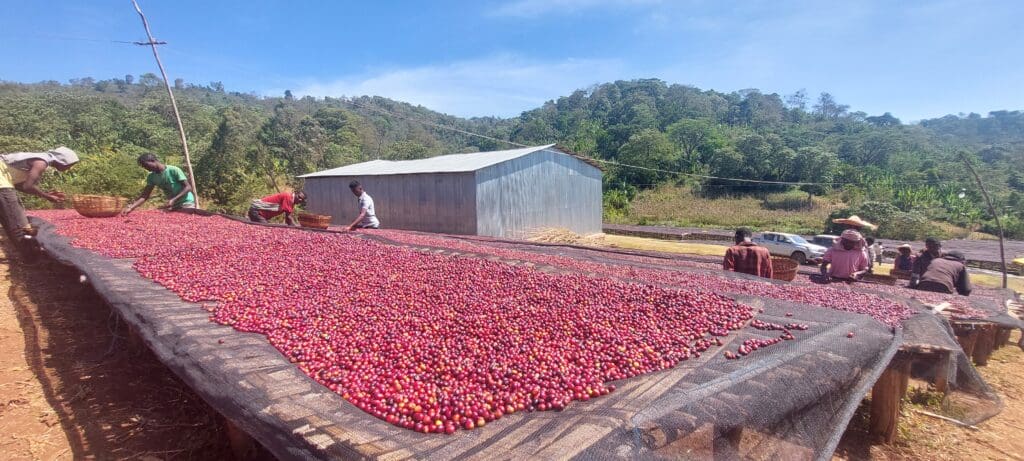
Cherries were depulped and fermented in sealed barrels for 96 hours, allowing controlled anaerobic fermentation. After fermentation, the coffee was dried on raised and shaded beds for 8 to 15 days, followed by a resting period in the warehouse to stabilize and achieve the ideal moisture content.
Once dried, the parchment coffee was locally milled to remove the husk and then hand-sorted to eliminate any primary defects. The bags were then transported to the Bette Buna dry mill in Gelan, near Addis Ababa, a 3 to 5-day journey by truck.
At the Gelan dry mill, the green beans went through additional cleaning, size and density grading, and color sorting, before being bagged and prepared for export.