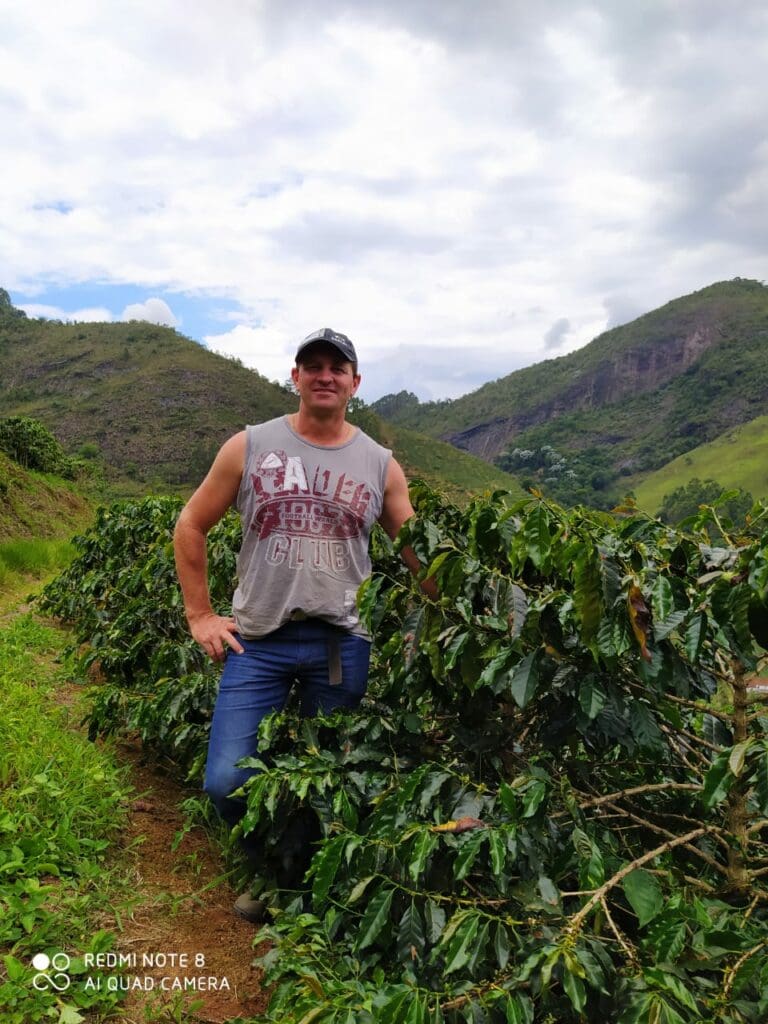
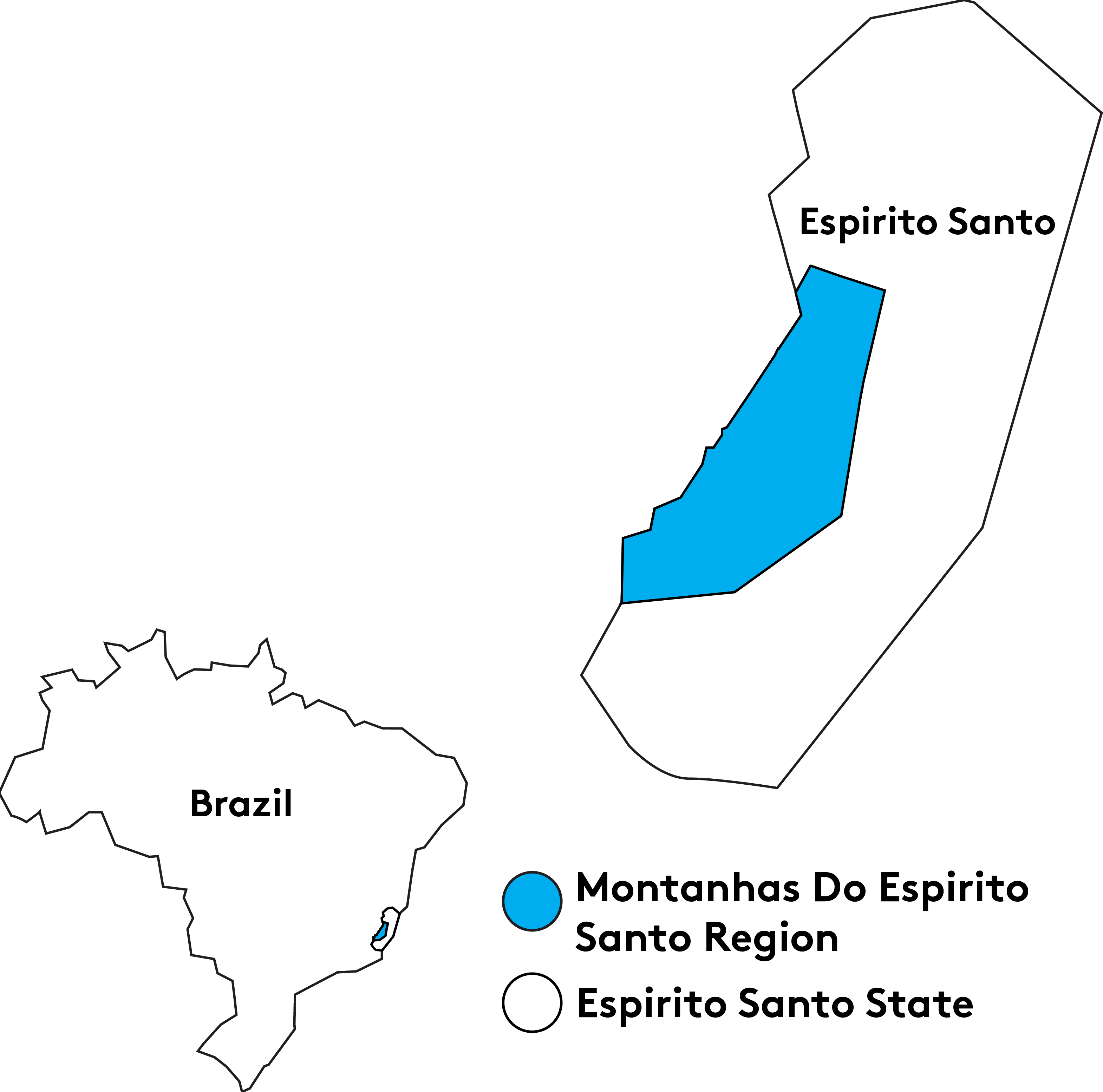
Ederval Sartori was born and raised on Sítio Bateia in the municipality of Castelo in the mountains of Capixabas in the south of Espírito Santo state. He was the youngest child of José Sartori, coffee producer and owner of the farm, and grew up working in the fields here with his father and siblings.
In 2010, Ederval acquired his own property and continued his coffee career working in partnership with his family, working on his own land as well as partnering in the farm that he had grown up on, Sítio Bateia. Bateia is now a partnership between three producers—José Fernando Fortunato, Ederval Sartori, and Edson Pires Sartori—who work together to cultivate the coffee here. After harvest, the coffee is divided between the three for post-harvest processing and sold by the producers as individuals.
The three partners have continued developing their production processes for many years now at the farm. They adhere to selective harvest of only ripe cherries, and Ederval dries his coffees on suspended beds in a greenhouse for a total of 15–20 days. Together they all share a vision of quality and sustainability in their production, seeking continuous improvement in their harvest and post-harvest processes.
This lot of Red Catucai underwent Pulped Natural processing. Catucai was developed as a cross between Icatu and Catuai. The first selection was made in 1988 by researchers at the then Brazilian Coffee Institute (IBC) in a population of the Red Icatu cultivar. After generations of breeding and selection in both Minas Gerais and Espírito Santo, the program gave rise to cultivars with red fruits and yellow fruits, then named Catucai.