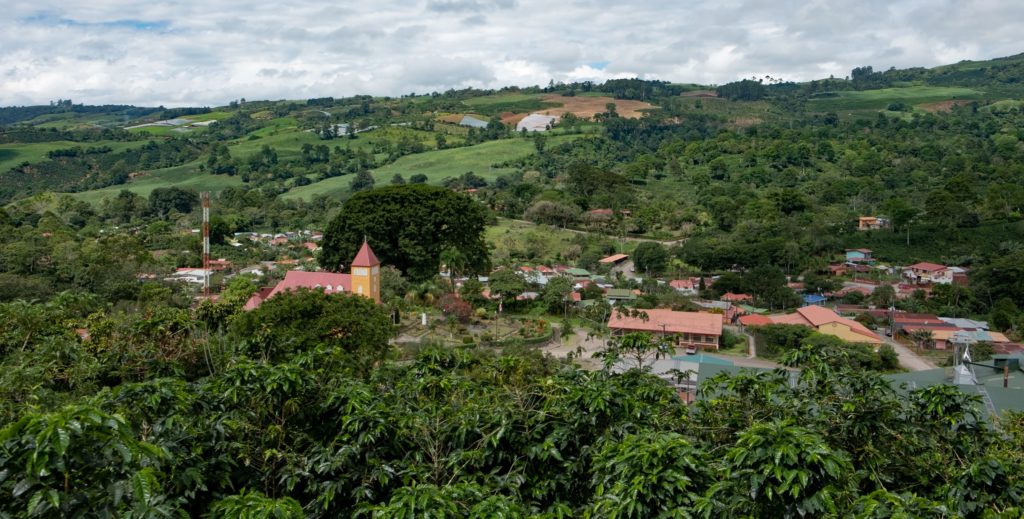
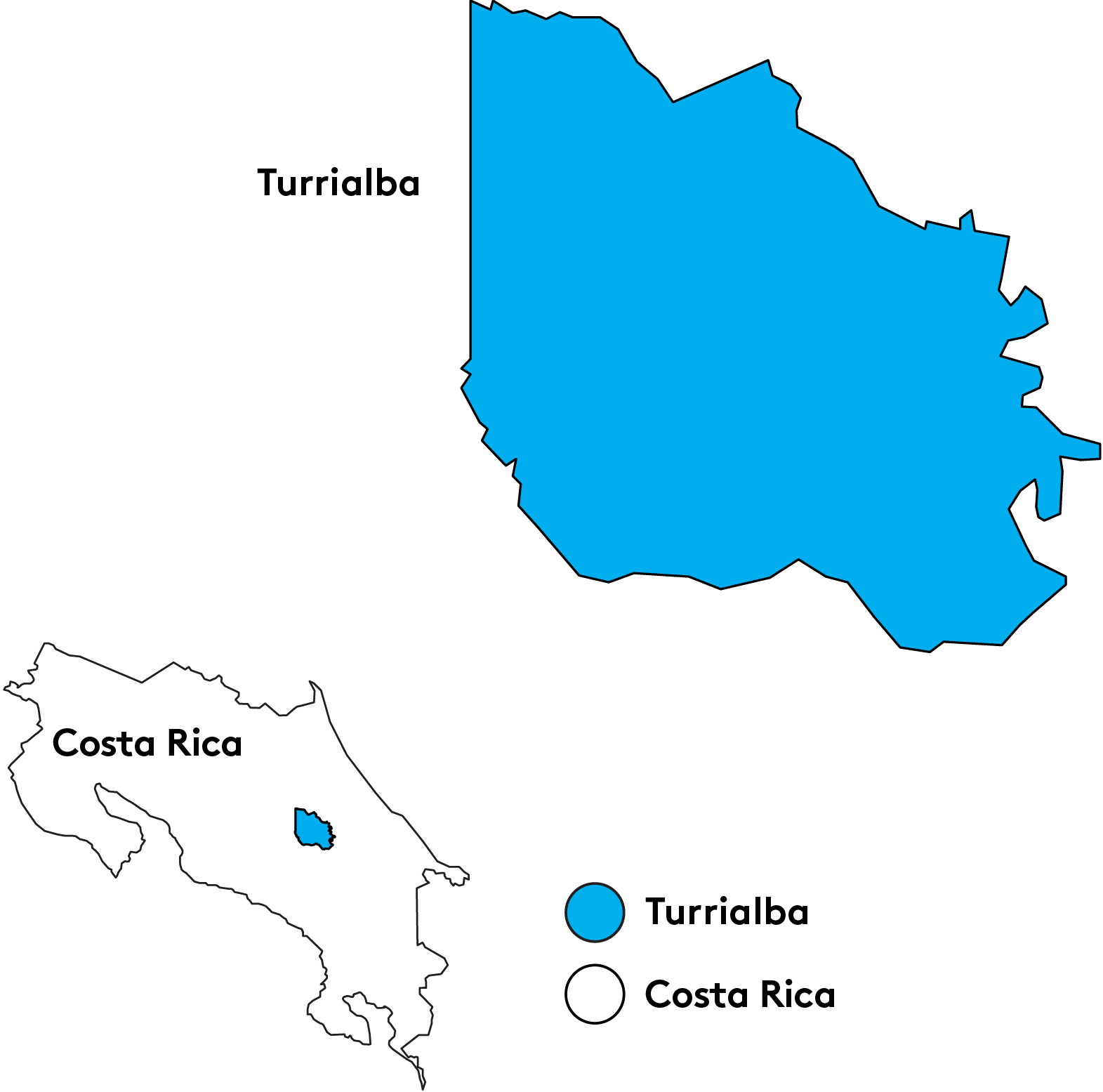
Aquiares Estate, whose name means “land between rivers” in the Huetar indigenous language, is located on the slopes of the Turrialba volcano in Costa Rica. Established in 1890, it is the largest coffee farm in the country and home to a community of approximately 1,800 people.
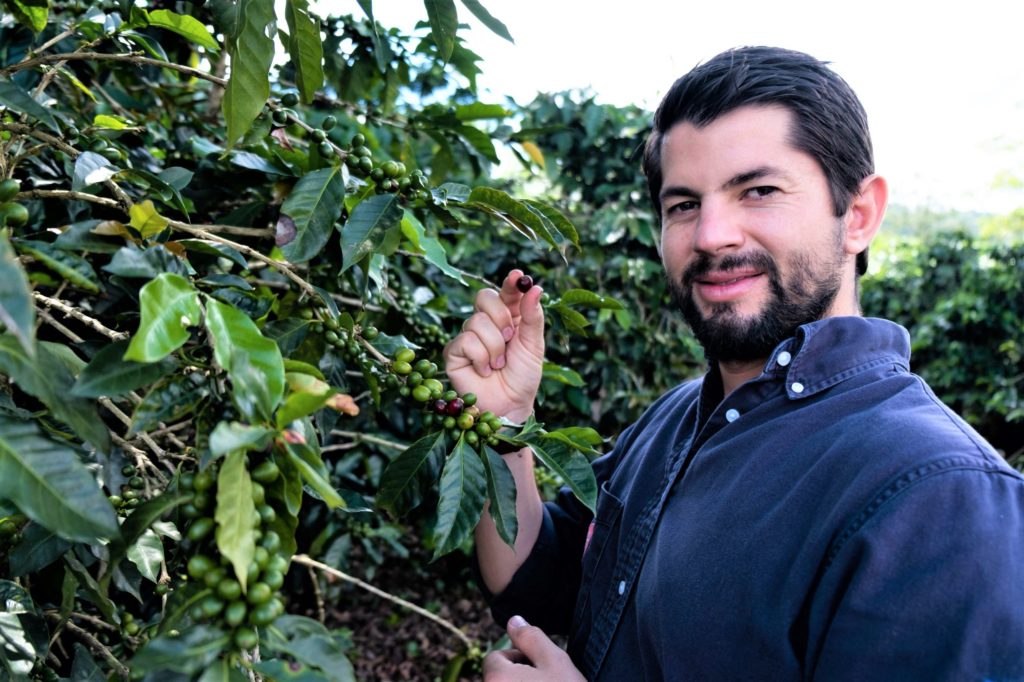
The farm’s modern development is closely linked to Alfonso Robelo, who arrived in Costa Rica in the 1980s and led the transformation of Aquiares into a more stable and integrated community. By enabling farm workers to purchase their homes, Aquiares evolved from a traditional estate model into a small town structure, strengthening long-term engagement in coffee production. Today, the farm is managed by his son, Diego Robelo, who continues to expand its focus on specialty coffee through agronomic improvements, variety selection, and processing innovation.
Aquiares operates with a strong emphasis on sustainability, including carbon neutrality initiatives and the preservation of biological corridors that support local biodiversity. The farm also collaborates with research institutions on environmental and agricultural studies, reinforcing its role as a model for sustainable coffee production in Central America.
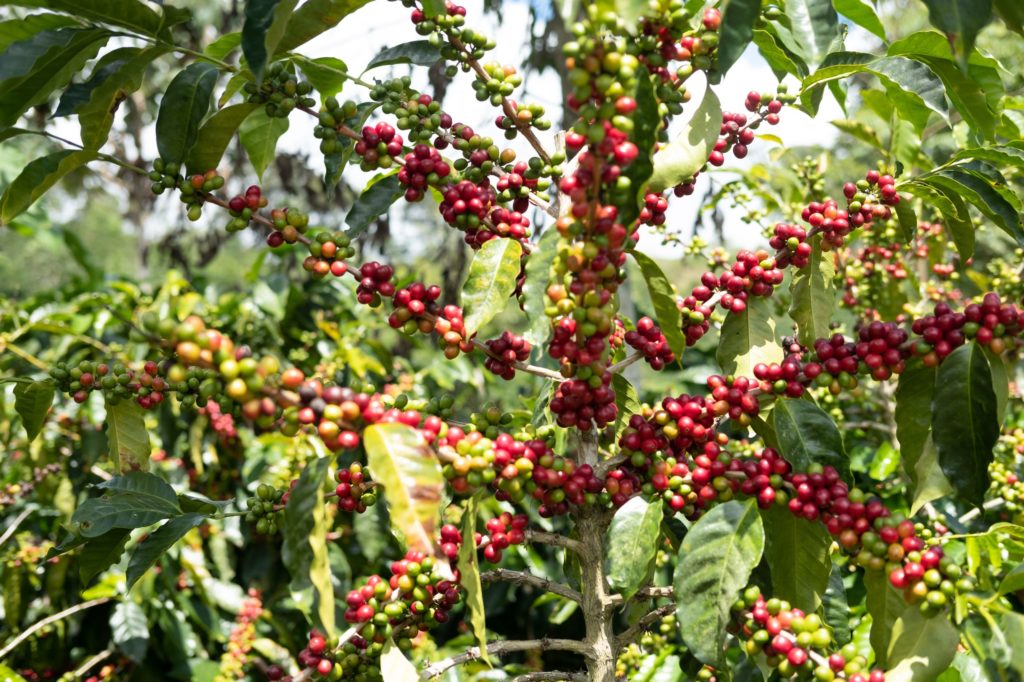
This lot features Centroamericano, an F1 hybrid derived from Sarchimor T-5296 and Rume Sudan. Propagated through somatic embryogenesis, this variety is recognized for its high productivity, rust resistance, and capacity to deliver complex and structured cup profiles under well-managed conditions.
As part of its diversification strategy, Aquiares developed a botanical program focused on the cultivation of medicinal herbs such as eucalyptus for essential oil production. This initiative, established in 2021 as an all-women-led project, also produces hydrosol, a water-based byproduct that retains the aromatic properties of the plant.
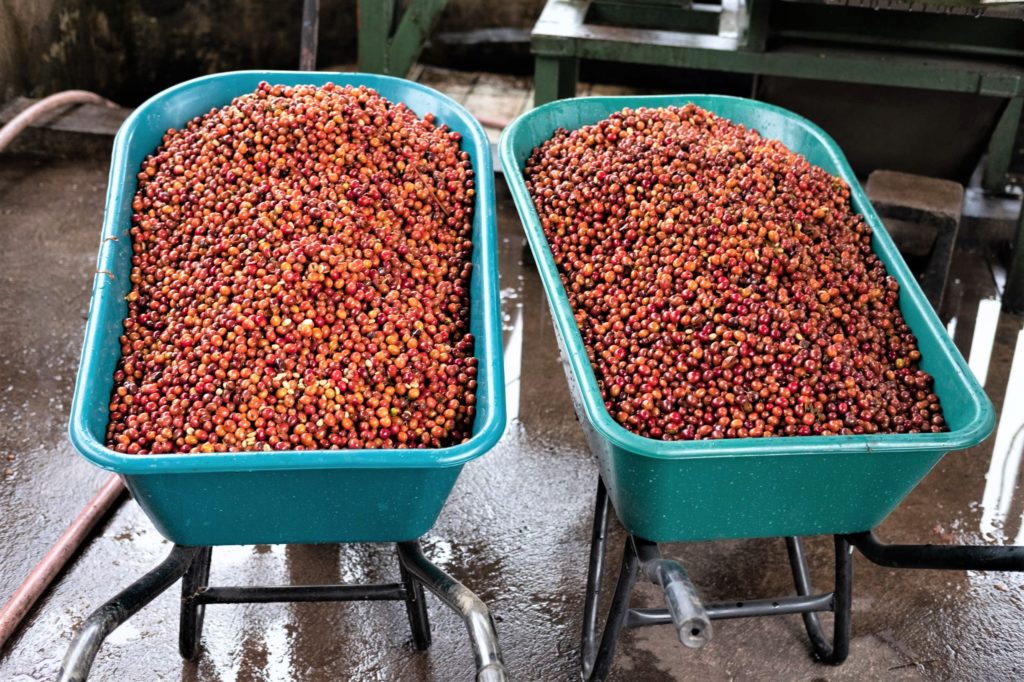
For this lot, eucalyptus hydrosol is incorporated as a fermentation input. Fully ripe cherries are selectively harvested and delivered to the mill, where floaters are removed. The cherries are then depulped, and the parchment coffee is transferred into sealed fermentation tanks. At this stage, eucalyptus-derived hydrosol is added to the mass.
Fermentation is carried out under controlled conditions, with temperature and pH monitored throughout. Once the coffee reaches a target pH of approximately 4.0—typically within 24 to 48 hours—it is removed from the tanks, drained, and fully washed.
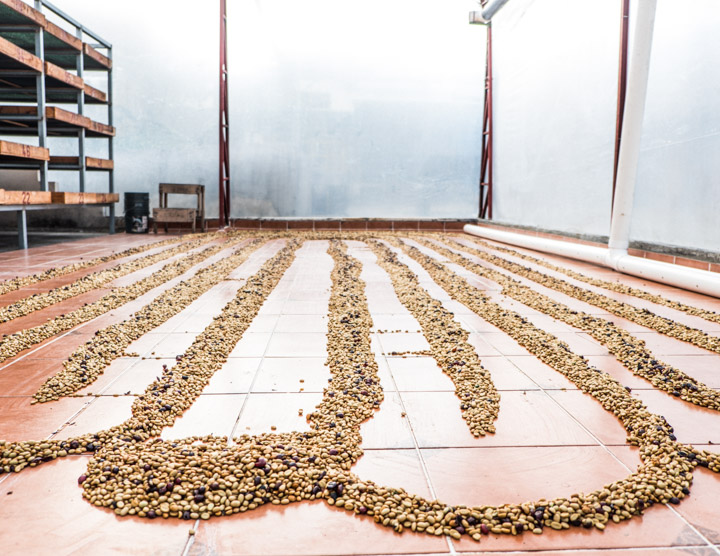
Drying takes place in solar dryers over approximately 16 days, allowing for a gradual and consistent reduction in moisture content. Following drying, the coffee is stabilized in GrainPro for a period of three months to support the integration and consolidation of aromatic characteristics.