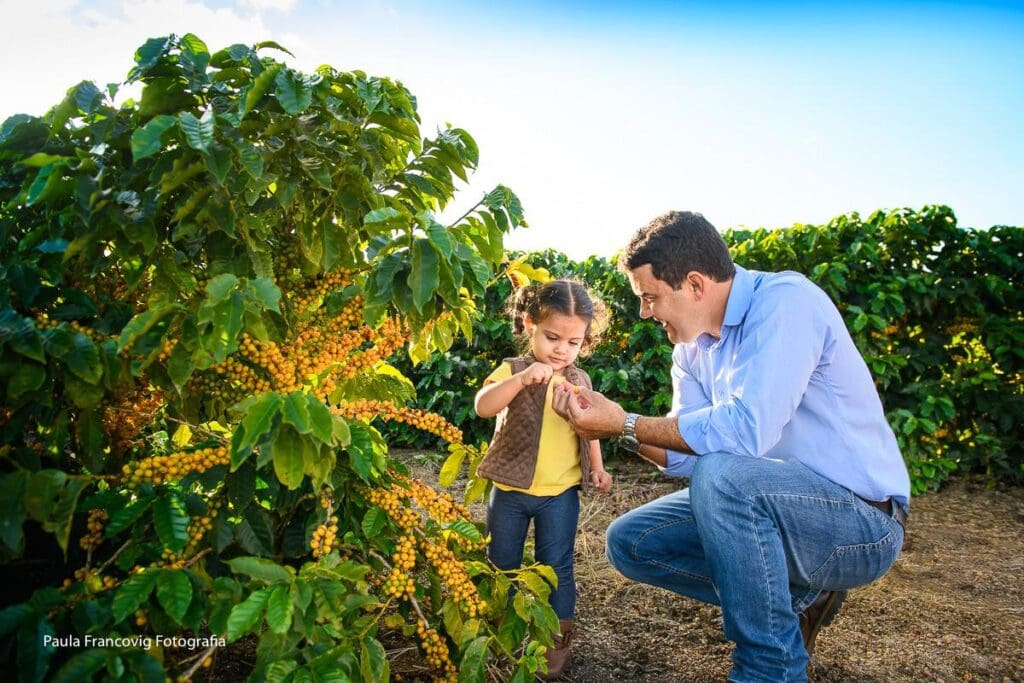
The history of Fazenda Retiro is relatively recent compared to many traditional farms, but it is rooted in family heritage. The coffee journey began when José Maria de Faria’s older brother decided to cultivate the portion of land he inherited from their parents, marking the first chapter of the family’s involvement in coffee growing.
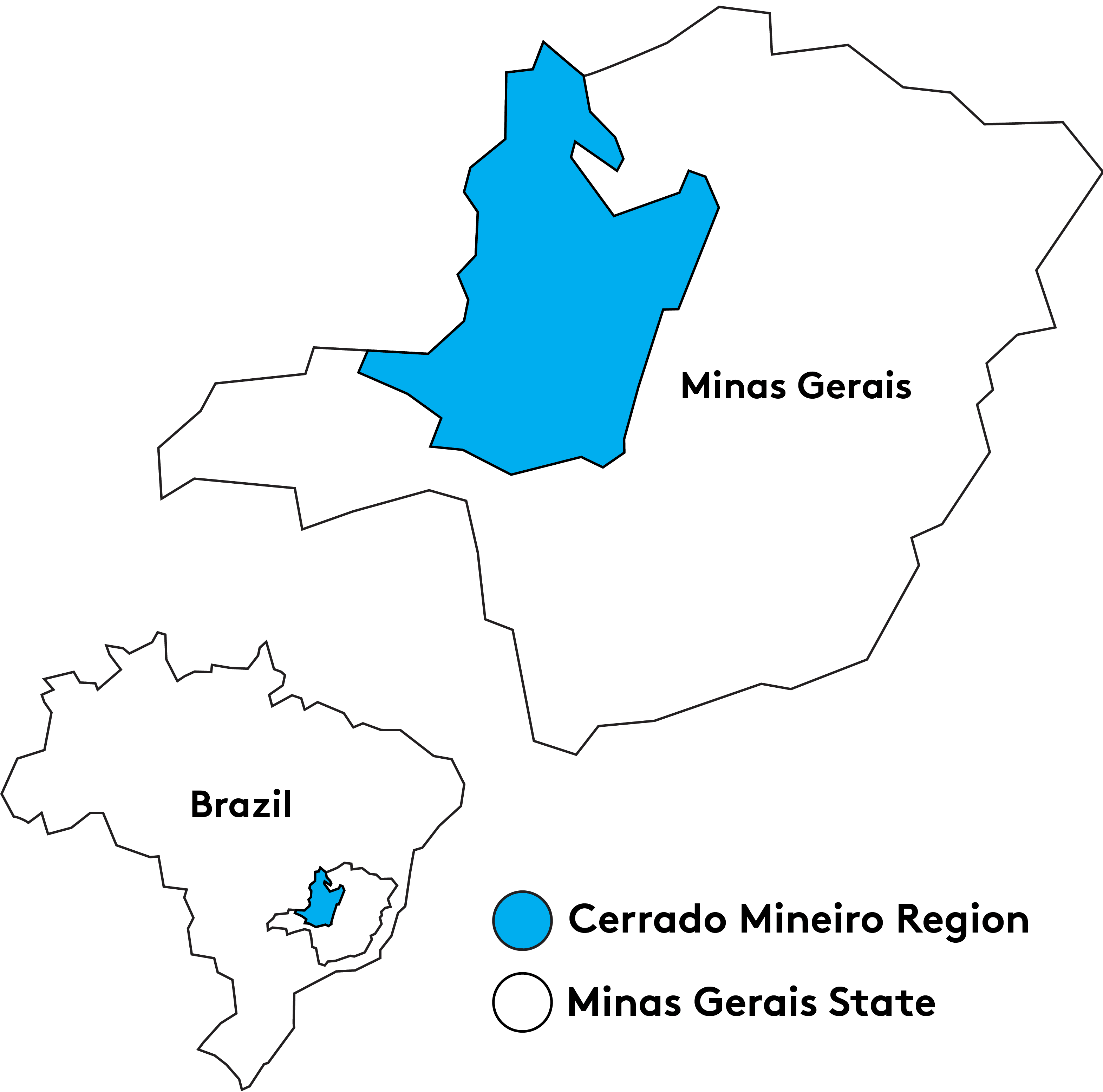
The family has always lived in the same region. Because the land was passed down through generations—and even with the acquisition of a few new plots over time—all areas remain within the same locality, Morro Alto, named after a distinctive hill, easily recognized for its height and shape that stands out in the landscape.
In the early days, the greatest challenge was waiting for the first harvest, a crucial period for ensuring the farm’s financial sustainability. Through patience, planning, and financial discipline, they successfully navigated this initial stage.
Today, the most significant challenge is the dry season. To overcome it, the family implemented an irrigation system to guarantee that the coffee plants receive water at the most critical moments. Their approach to cultivation is marked by strict care with timing and precise treatment applications, ensuring plant health and coffee quality.
José’s main motivation is to build a stable and tranquil future for his family, creating something solid for the next generations. From the beginning, he has counted on the help of his nephew, Hugo, who plays an essential role in managing crop care. Looking ahead, José finds confidence and hope in his daughter Isabela’s genuine interest in coffee growing, reinforcing the continuity of the family’s legacy.
For this Paraíso lot, the cherries were harvested at peak ripeness and dried on a concrete patio for approximately 8 to 12 days, until they reached the ideal moisture level. After drying, the coffee was taken for processing, where the parchment and peel were removed, preparing the lot for roasting and cupping.