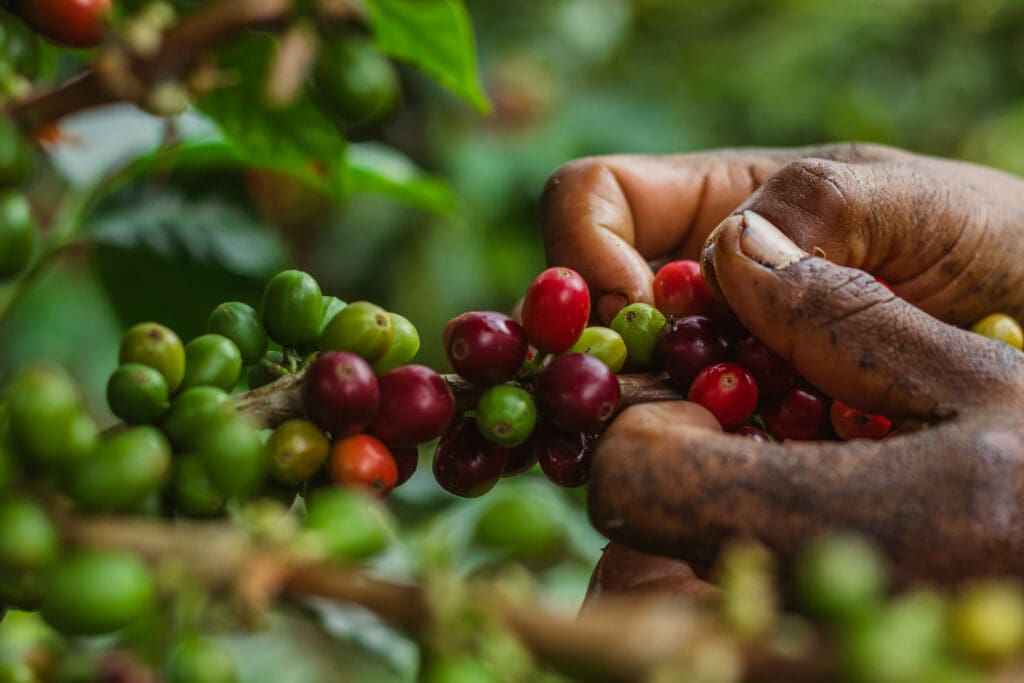
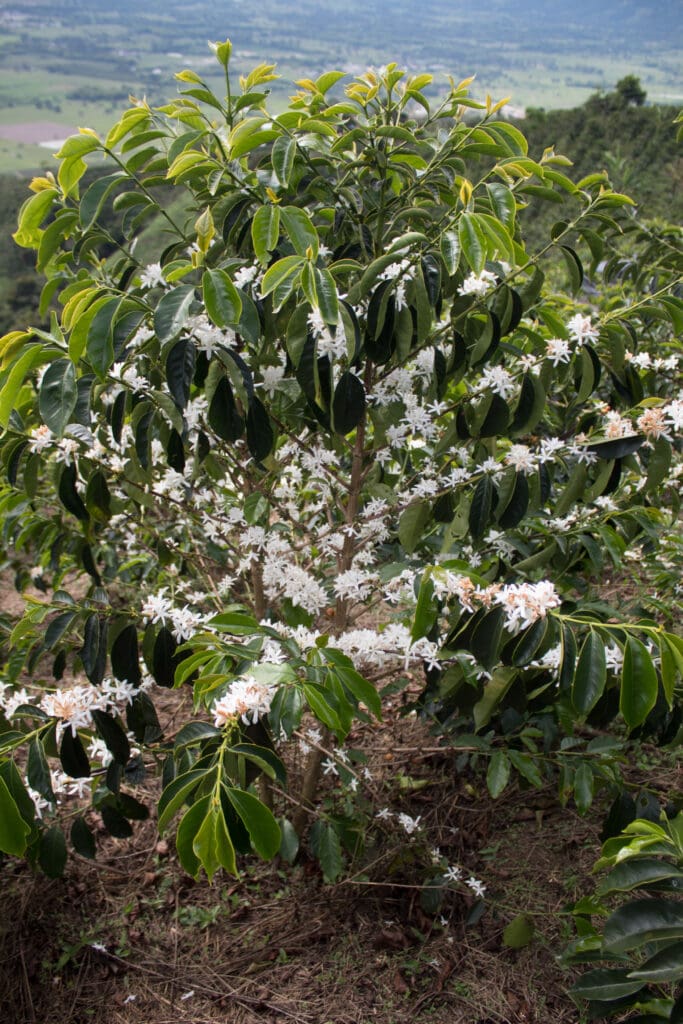
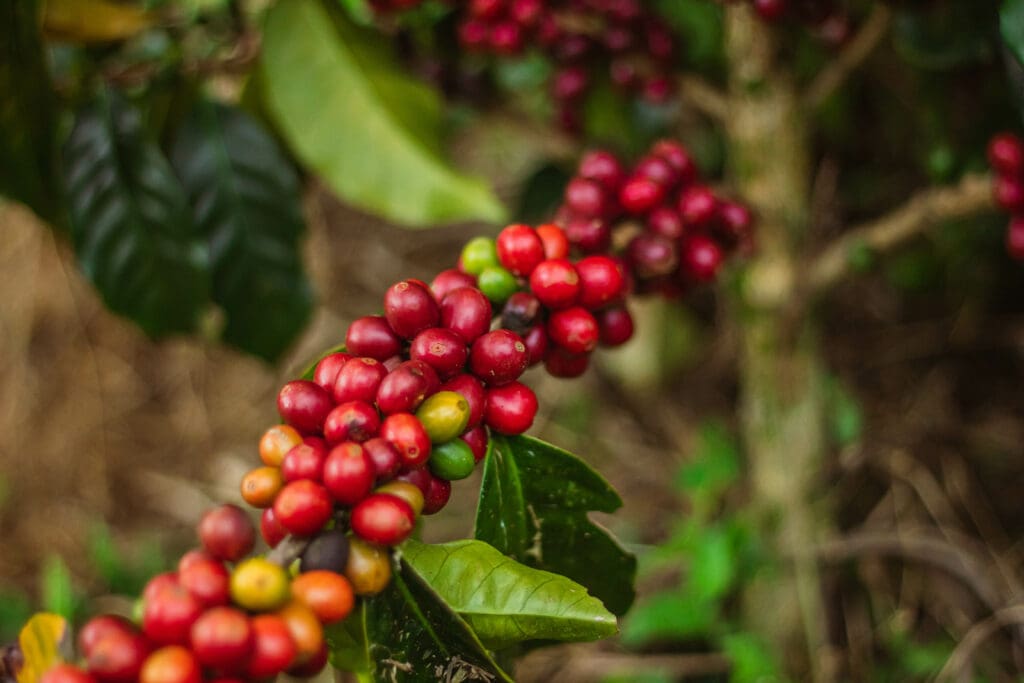
El Edén farm, managed by the Sánchez family, is in the Samaria district of Palestina 1500 meters above sea level (m.a.s.l.). The farm benefits from excellent environmental conditions, including over 8 hours of daylight and annual rainfall between 1800-2000 mm. These conditions support year-round flowering, producing unique sensory profiles.
Rodrigo Sanchez and his team focus on producing both quality and quantity. By following a systematic plan for fertilization, variety selection, pest and plague control, harvesting, and processing, they can produce consistent quality.
They have won several awards and recognitions, including Yara Champion 2017: 1st place with Pink Bourbon, Yara Champion 2018: 2nd place with Pink Bourbon, and Roasters United 2019: 1st and 3rd places with Purple Caturra.
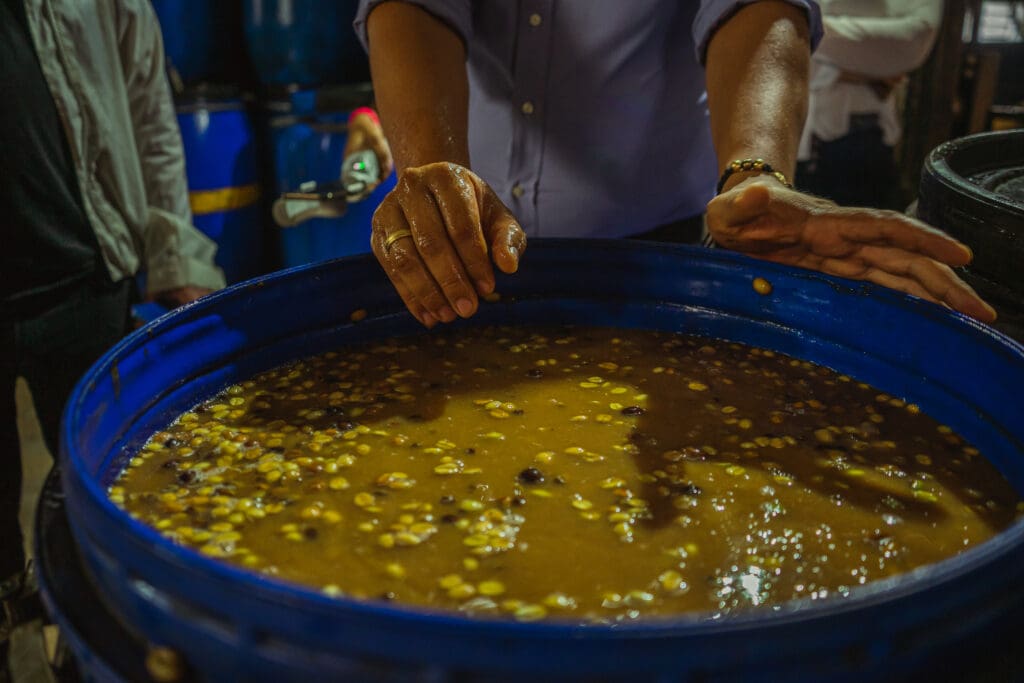
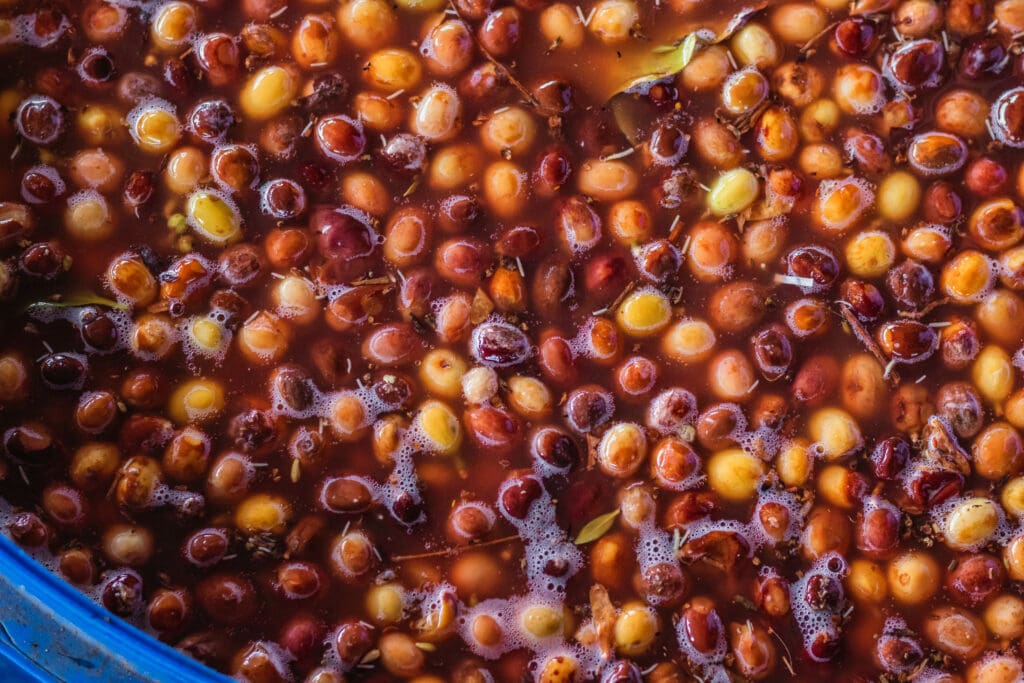
This lot of Purple Caturra and Bourbon underwent a co-fermentation washed method with red fruit juices and a touch of liquor, enhancing the coffee’s natural sweetness and high Brix levels to develop a rich and nuanced profile.
Processing Method:
- Microorganism Selection: Cultivation of lactobacillus and saccharomyces cerevisiae.
- Mother Culture Preparation: A blend of microorganisms with red fruit juices and liquor.
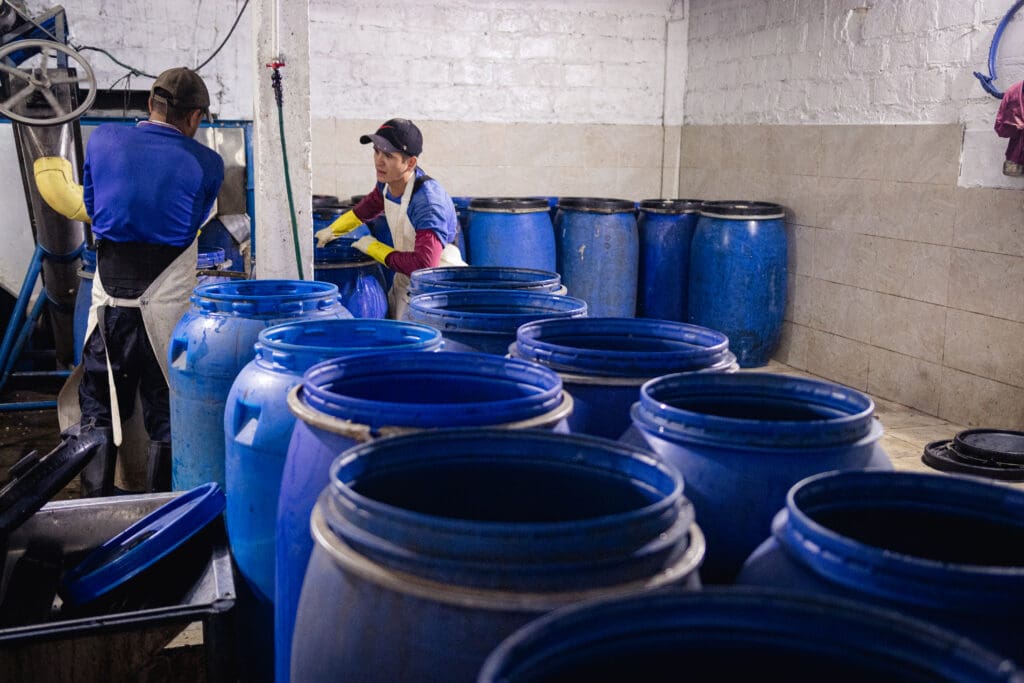
- Fermentation: Coffee cherries are fermented with the mother culture for 190 hours, ensuring Brix levels stay above 6 and pH remains above 4 to highlight fruit notes without altering the coffee’s base flavor.
The Tamarind Co-Fermented Washed process begins with creating its unique fermentation culture. First, a mother culture containing microorganisms like lactobacillus and saccharomyces cerevisiae is derived from Rodrigo’s Purple Caturra coffee cherries. Eighty liters of this culture are then set aside and fed with sugar, molasses, red fruit juices, and a touch of liquor. The fruit mixture contributes flavor to the culture, while the sweetener energizes the fermentation and brings the culture’s sugar content to a level that matches the degrees Brix of the coffee that will be processed. This initial fermentation of the mother culture and fruits (with tamarind being a key component) takes 190 hours to reach the appropriate degrees Brix and pH value for coffee processing.
Before being processed with the fruit-ferfermented culture, coffee cherries are measured for sugar content as soon as they reach the mill at Pitalito. Cherries are then floated to remove impurities before being deposited into a 200-liter sealed tank. The 80-liter culture that was previously fermented with the fruits is added to the sealed tank, and the coffee is fermented for 150 hours. During this process, the team continuously monitors measurements to ensure the environment doesn’t drop below 6 degrees Brix or a pH of 4. The coffee is then moved to the drying area, where it is dried for 2–3 days in direct sunlight and then for 15–18 days under shaded canopies until it reaches 10–11% humidity.