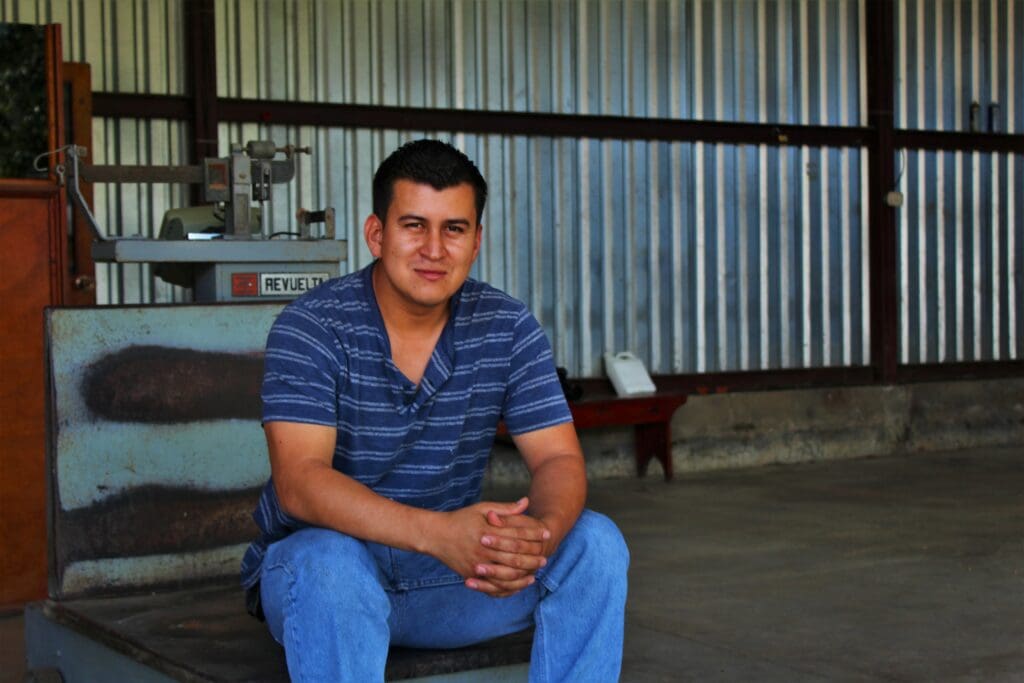
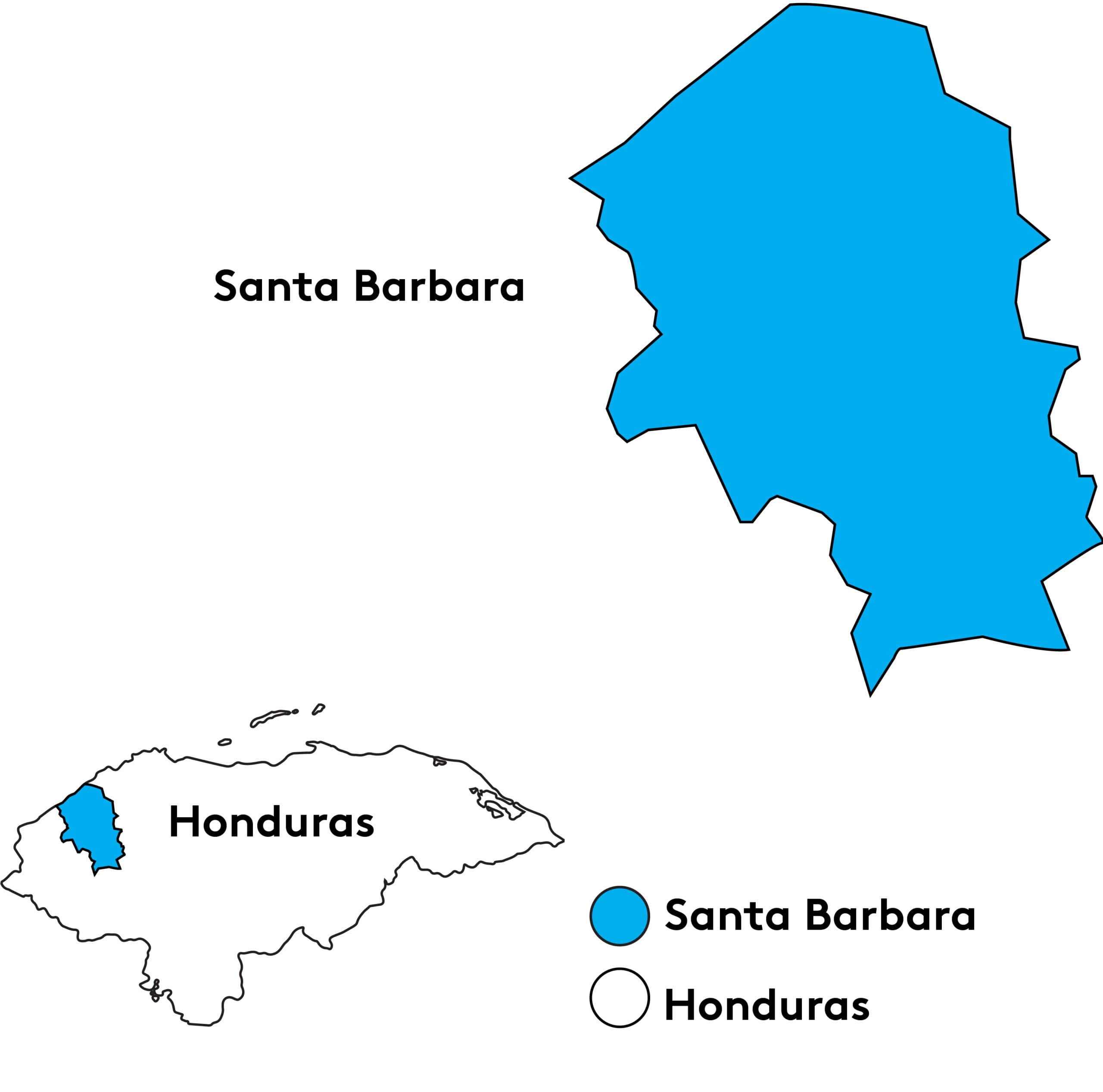
Jairon Moreno is a third generation coffee producer who learned the trade from his father and family. In 2012, after graduating from high school, he purchased his first farm and began working with Exportadora San Vicente, with whom his father was already partnered. This first farm was located in the higher elevations of Santa Barbara’s mountainous coffee region, experiencing a cold climate which made coffee production challenging. After seven years of low production volumes due to the temperatures, Jairon sold the farm to instead purchase a property farther down the mountain and nearer to his place of work.
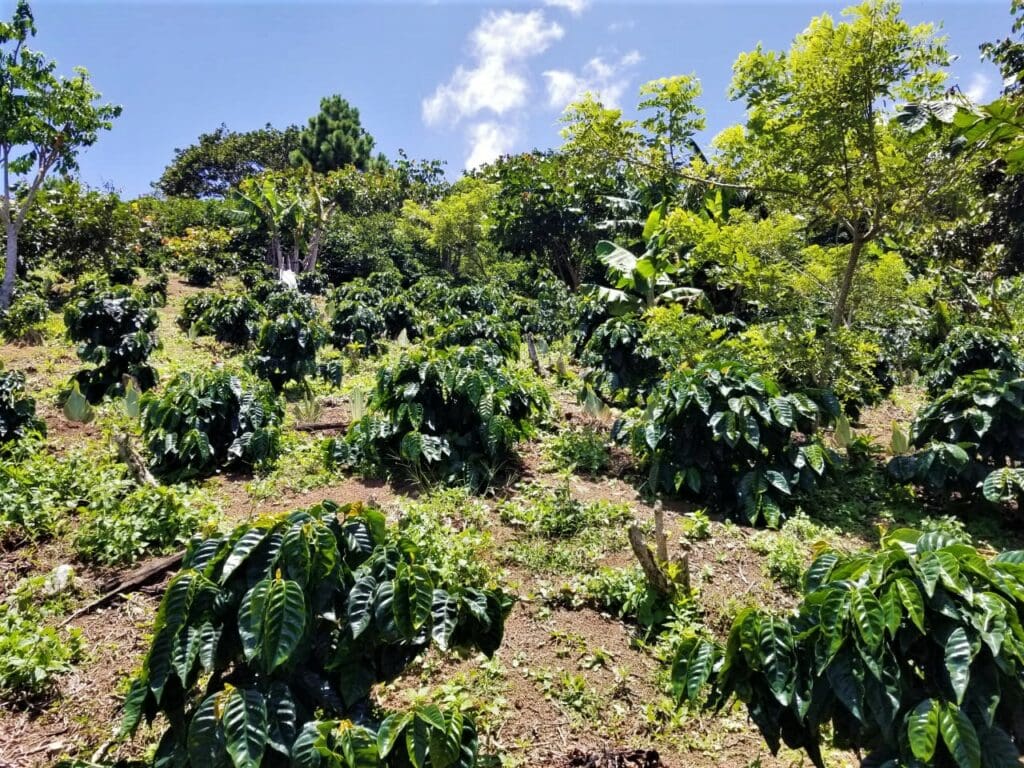
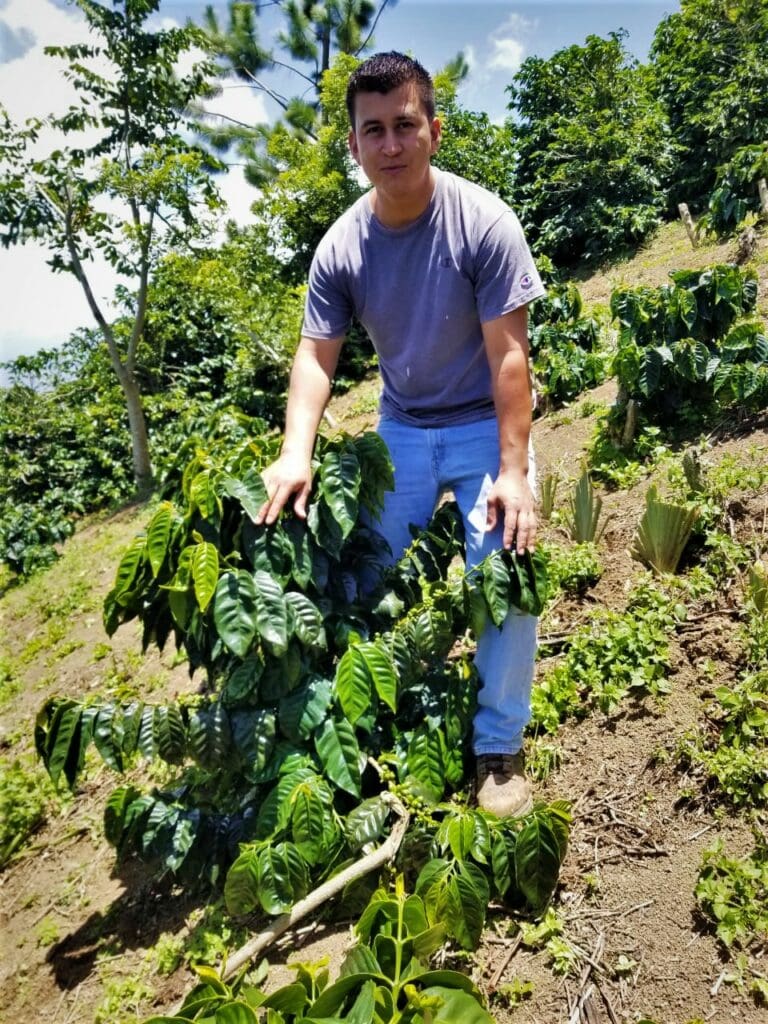
El Niño farm is located 1500 meters above sea level in La Leona, Santa Barbara. The land was already planted with Pacas and IH90 coffee when Jairon bought it in 2020, but the trees were in a state of abandonment. He worked hard to rejuvenate the land and coffee to make the farm productive again, and planted a plot of Parainema and Pacas to grow alongside the other varieties.
Today, the farm is thriving under Jairon’s care, and he’s proud to be producing high quality specialty coffee microlots on his property.
This lot of IH90 coffee underwent Natural processing. Freshly harvested cherries were first sorted to remove damaged, dry, or defective cherries. The remaining cherries were then spread across plastic tarps to dry in full sun exposure for 22 days. Throughout the drying process, the cherries were moved every 30 minutes to ensure even drying.