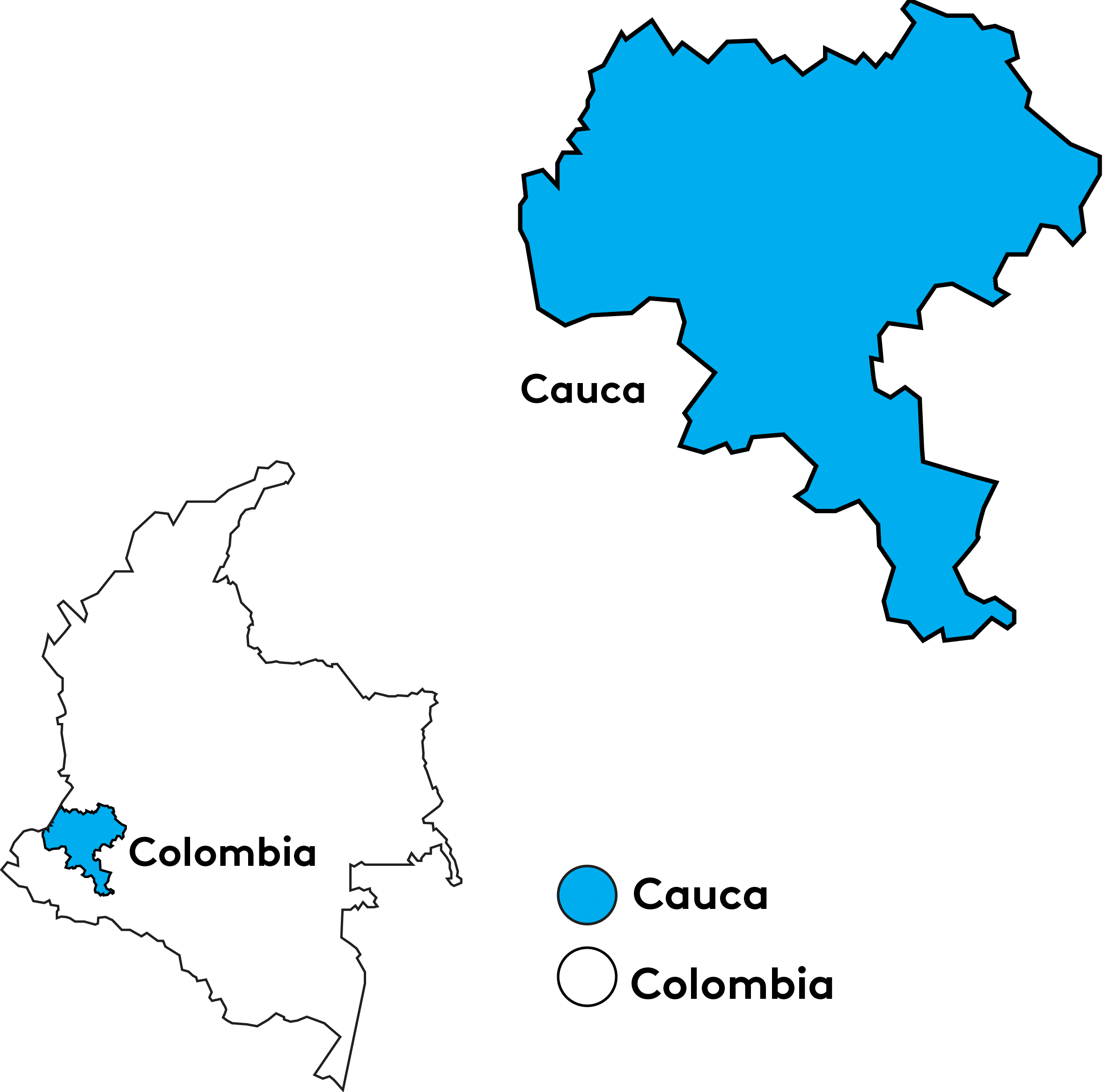
Inzá Blend comes from a group of smallholder producers in the Cauca region, specifically in the municipality of Inzá. Grown at
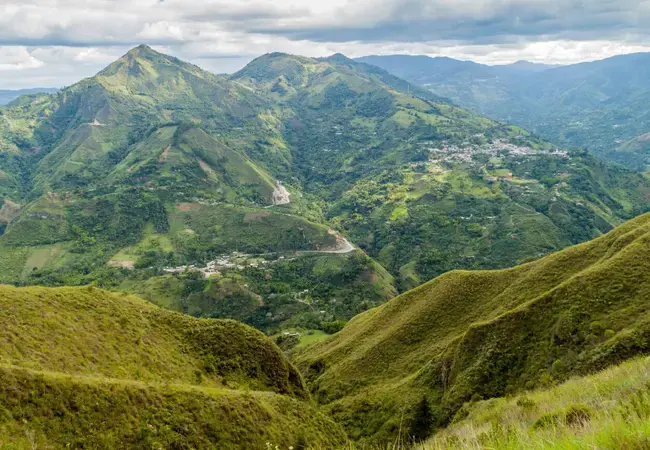
Inzá Blend comes from a group of smallholder producers in the municipality of Inzá, located in the eastern mountains of Cauca in southern Colombia. This high-elevation region, situated between 1,700 and 2,000 meters above sea level, is known for its volcanic soils, cool temperatures, and mountainous terrain, conditions that contribute to slow cherry maturation and coffees recognized for their vibrant acidity, sweetness, and structure.
Inzá is also home to strong Indigenous communities, particularly the Nasa people, whose connection to the land and agricultural traditions has shaped the region for generations. Coffee production in the area is deeply tied to community life, family work, and collective collaboration, with many farms managed through shared knowledge passed down over time. Alongside coffee, producers cultivate crops such as beans, corn, plantain, and cassava, supporting diversified rural livelihoods across the region.
This blend is composed primarily of Castillo, Colombia, and Caturra varieties cultivated on small family-managed farms. Producers apply traditional washed processing methods, contributing to a clean and vibrant cup profile that reflects the character of Cauca’s highlands.
What truly defines this blend is the collaborative spirit within the community. Producers frequently support one another throughout harvest and post-harvest activities, working collectively across neighboring farms and families. Their shared commitment to quality, consistency, and long-term growth creates a foundation that extends beyond individual producers.
This coffee represents both the regional identity of Inzá and the collective effort behind its production, a reflection of community, tradition, and the evolving specialty coffee culture of southern Colombia.
For this coffee, cherries are selectively harvested at peak ripeness by smallholder producers across the region. After harvest, the coffee is depulped using small-scale mechanical depulpers commonly found on family farms throughout the area.
The coffee then passes through a traditional washed process with immediate mucilage removal, minimizing extended fermentation and emphasizing clarity and cleanliness in the cup profile. Following washing, the parchment coffee is transferred to drying areas, where it is commonly dried on patios or raised beds under the cool mountain conditions of Inzá.
Drying is carried out slowly and carefully until stable moisture content is achieved, preserving the balanced acidity, sweetness, and structure characteristic of coffees produced in the highlands of Cauca.