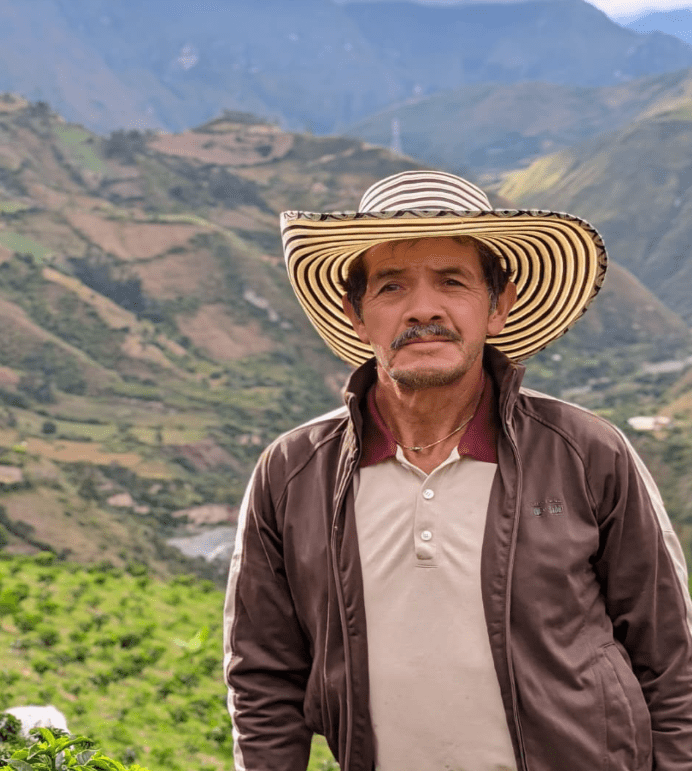
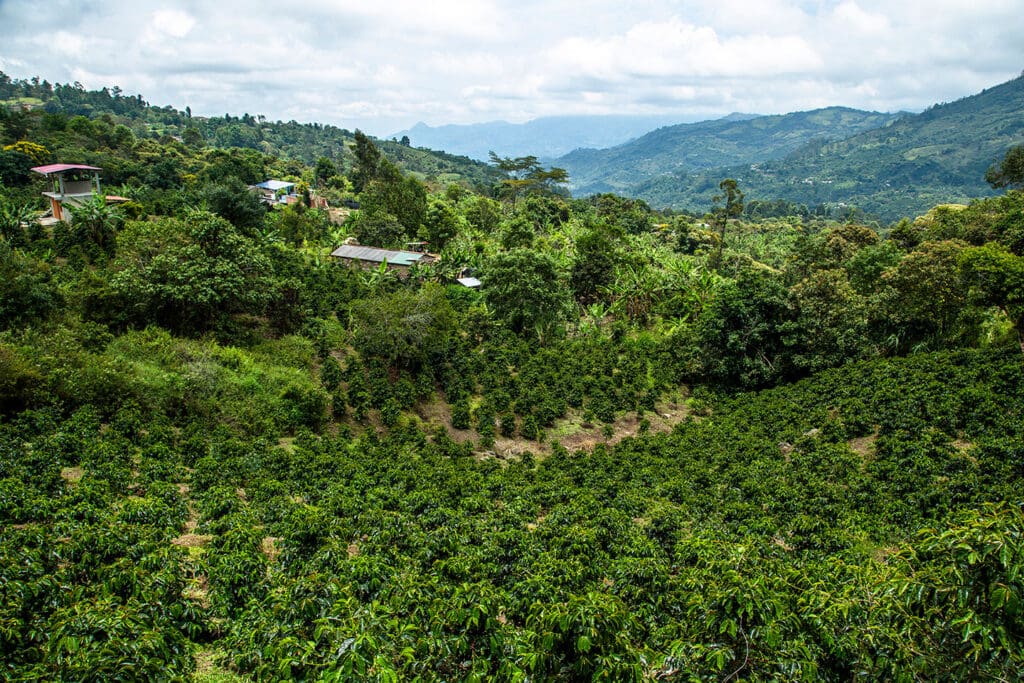
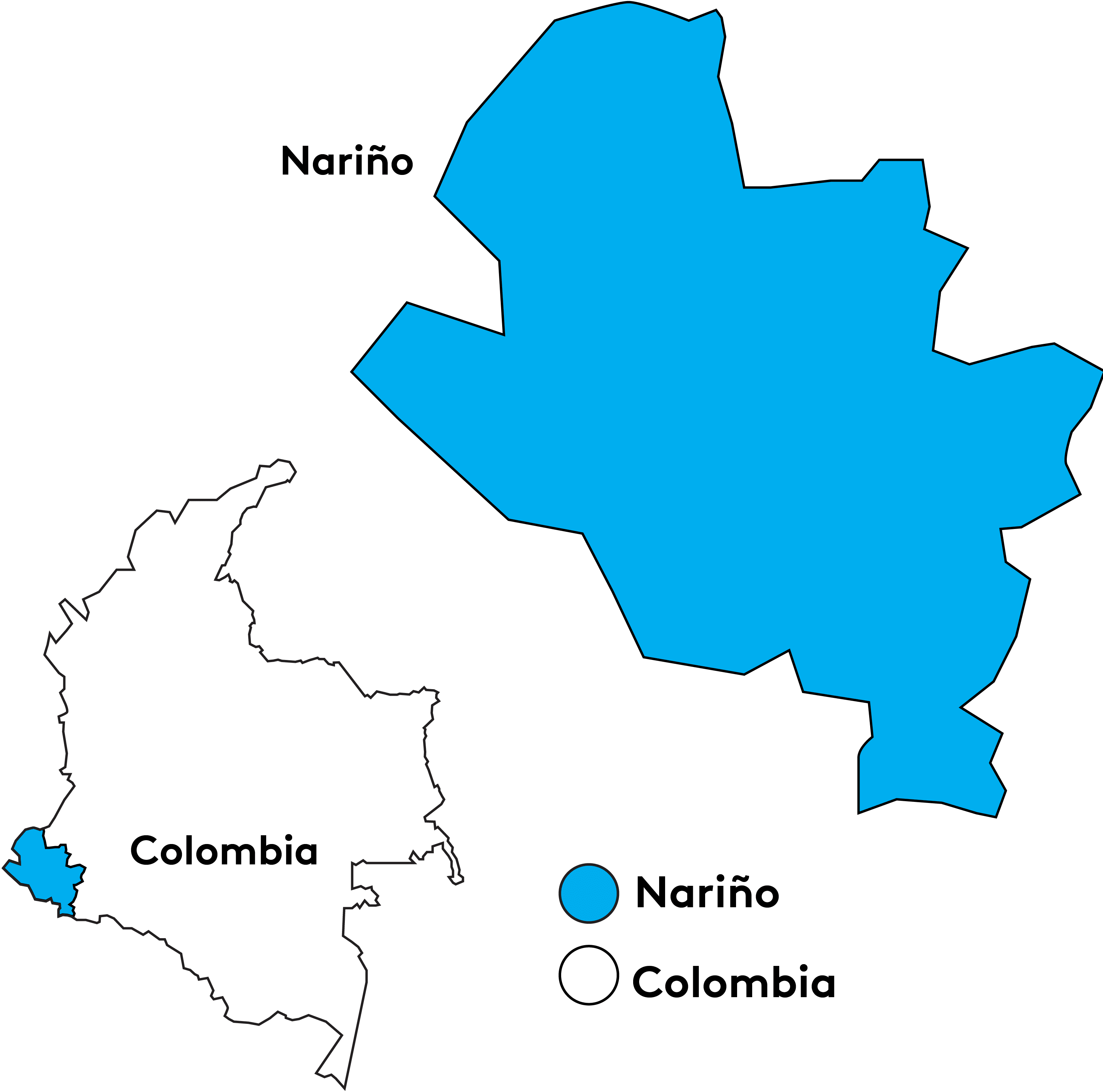
Funes is a municipality located in the department of Nariño in southwestern Colombia, within the Andean region. The area is defined by a wide range of thermal floors, from temperate zones to high-altitude páramo. Coffee production in specific sectors takes place between 2,000 and 2,400 masl, where conditions are suitable for high-altitude coffees.
This Washed blend is composed of lots collected from smallholder producers in the municipality, where farms typically average no more than 2 hectares. The landscape is characterized by steep mountains, plateaus, and sloped terrain, influenced by wind currents rising through lower-altitude canyons. These conditions, combined with high elevations and low temperatures, contribute to a slow cherry maturation.
Coffee cultivation in Funes is relatively recent. It was introduced in 2002 through a municipal initiative that distributed coffee seedlings of different varieties via community nurseries, offering producers an alternative agricultural activity. Over time, coffee production expanded across the municipality as producers adopted and developed the crop, supported by local institutions.
The region’s agroclimatic conditions—particularly altitude, temperature variability, and volcanic soils—play a key role in fruit development and cup profile. At higher elevations, these factors contribute to coffees with pronounced acidity, defined structure, and clear sensory expression.
During harvest, cherries are selectively handpicked at peak ripeness, with producers sorting by color to ensure consistency within each lot. On the same day, cherries undergo a flotation stage to remove low-density beans and foreign material, establishing a clean starting point for processing.
The coffee is then mechanically depulped without the use of water and transferred to open concrete tanks, where it ferments in mucilage. This stage typically lasts between 24 and 48 hours, with timing adjusted by each producer based on experience and local conditions.
Following fermentation, the coffee is washed—often multiple times—to fully remove the remaining mucilage, reflecting traditional practices in the region. Drying takes place under the sun for 13 to 18 days, depending on weather conditions, until the coffee reaches a stable moisture content.