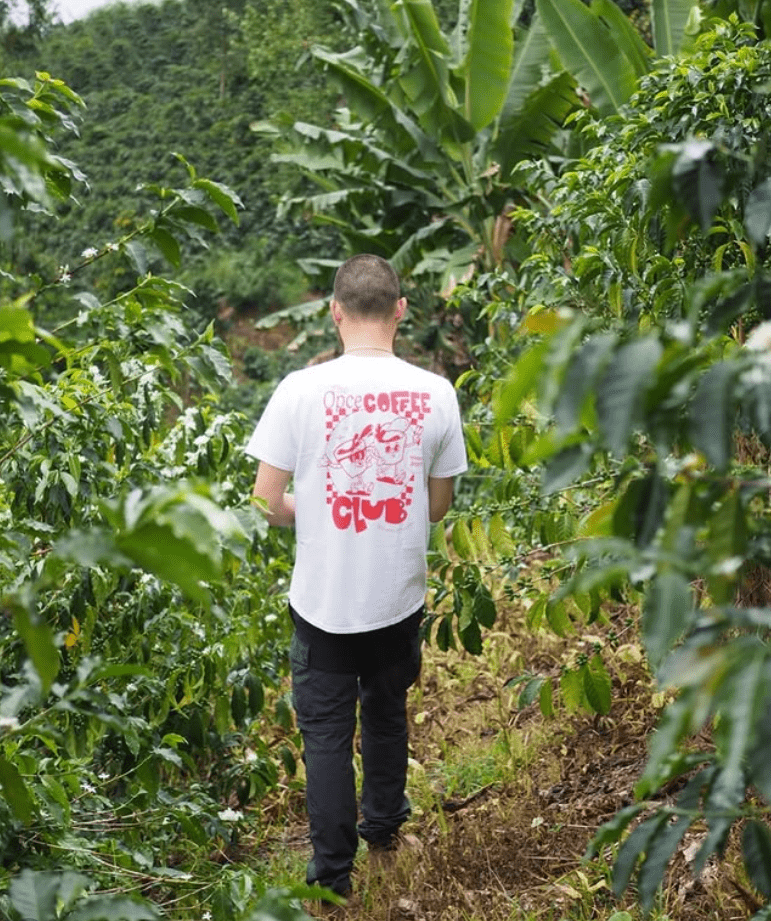
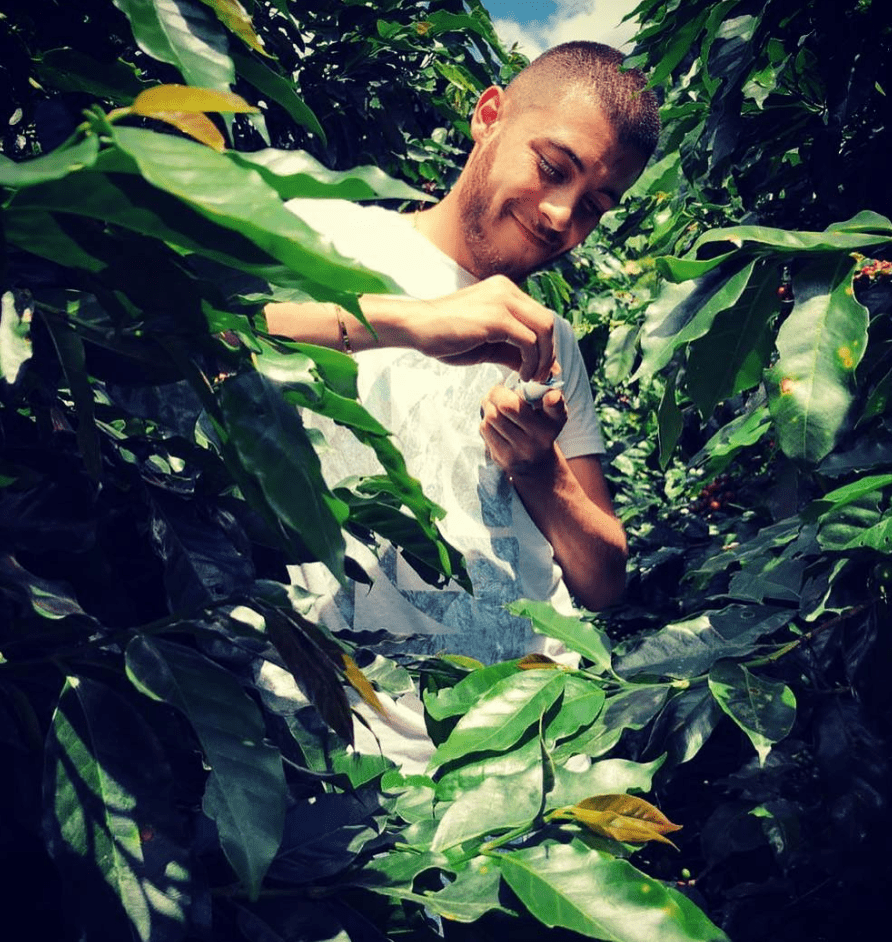
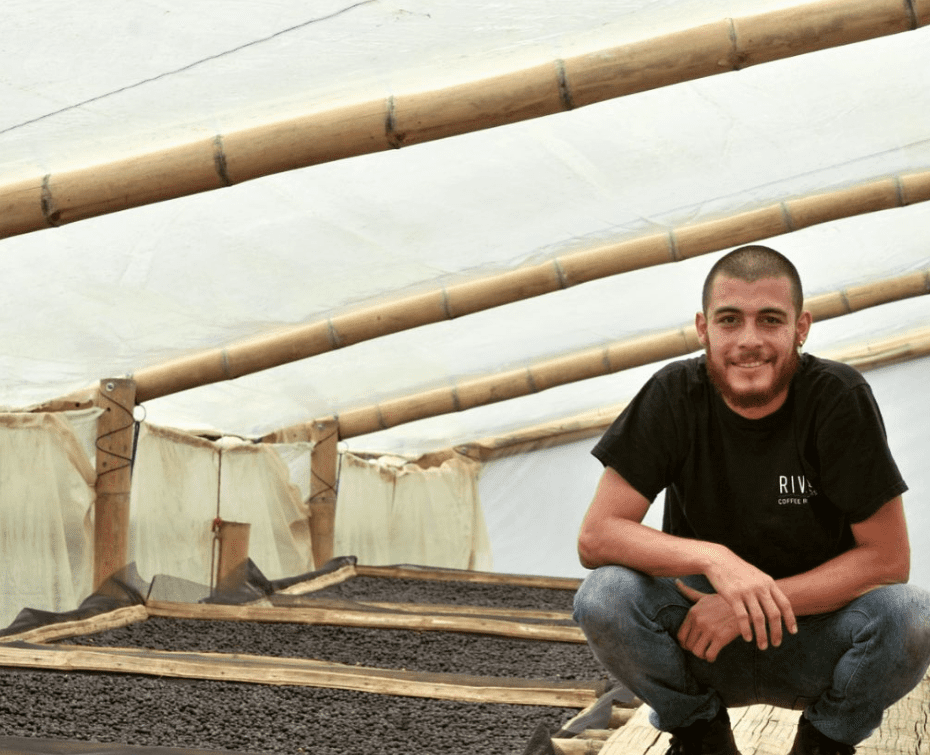
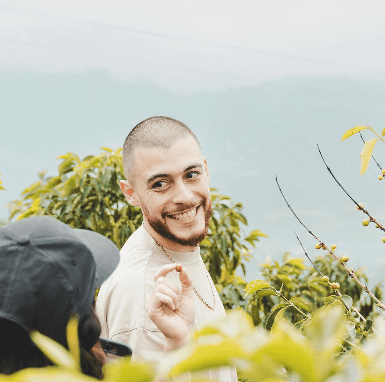
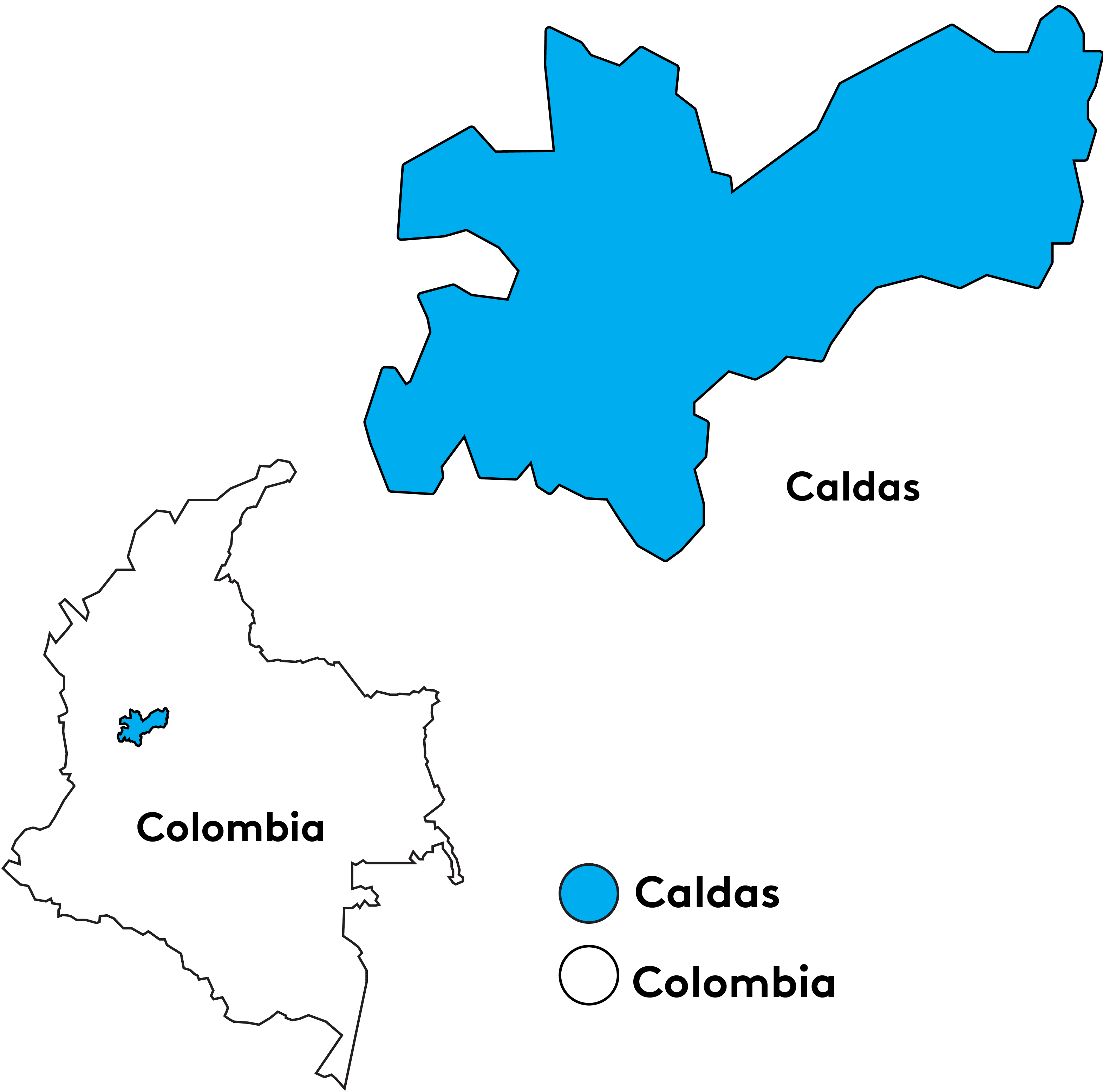
Kumanday is part of the coffee-growing legacy of the Restrepo family in Caldas, Colombia. Led by Elmer Restrepo and his son Juan Felipe Restrepo, the project reflects decades of experience in coffee production combined with a continuous drive for innovation and quality improvement.
Elmer Restrepo has dedicated more than four decades to coffee, building a deep understanding of cultivation, processing, and the social impact of coffee production within his region. His commitment to the industry laid the foundation for a family project that would later evolve through the next generation.
Today, Juan Felipe Restrepo contributes a complementary perspective rooted in fermentation science, sensory analysis, and post-harvest innovation. Through years of research and experimentation, he has developed advanced processing protocols that explore the relationship between microbiology, fermentation, and cup quality.
Together, father and son represent the intersection of tradition and innovation. Their work combines practical farming knowledge with a scientific approach to coffee processing, creating coffees that express both the agricultural heritage of Caldas and the evolving possibilities of specialty coffee production.
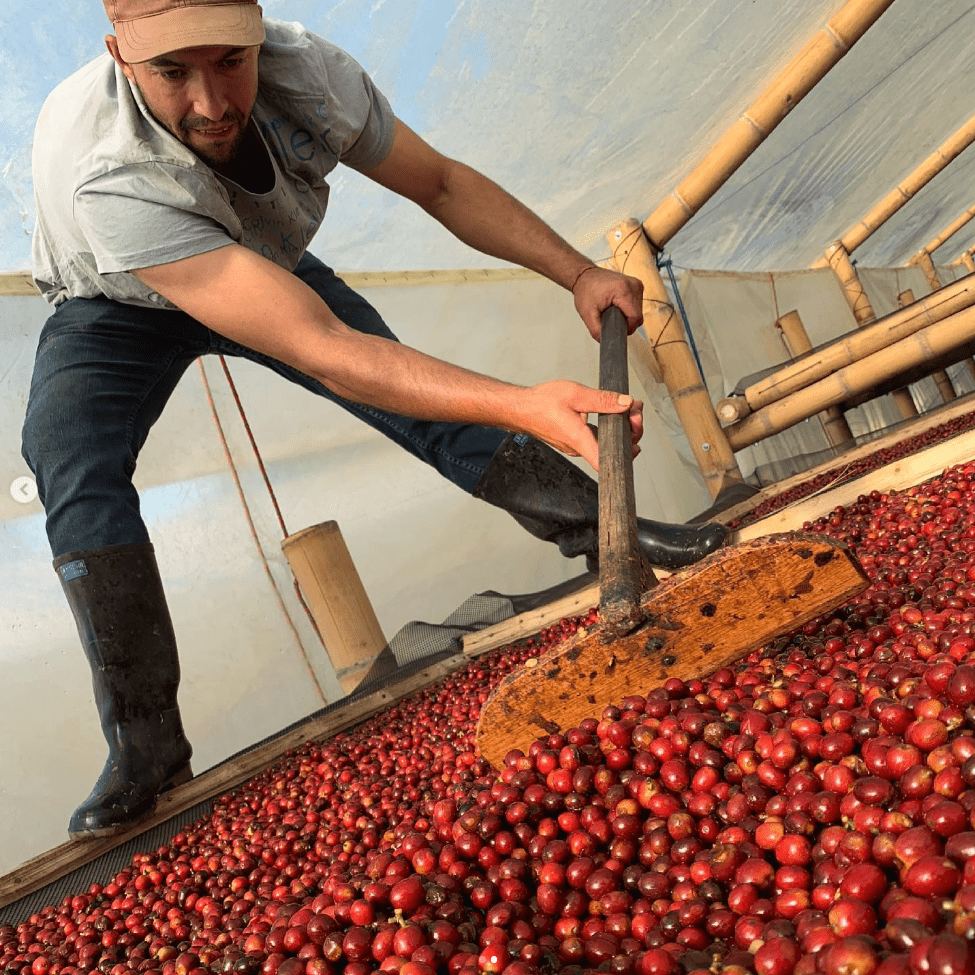
This natural process starts with cherries received at optimal ripeness, with a sugar content between 14% and 16° Brix. After a flotation step to separate lower-density fruit, the selected cherries are placed into fermentation tanks in 1,500 kg batches. A 36-hour dry fermentation follows, allowing the natural characteristics of the fruit to develop.
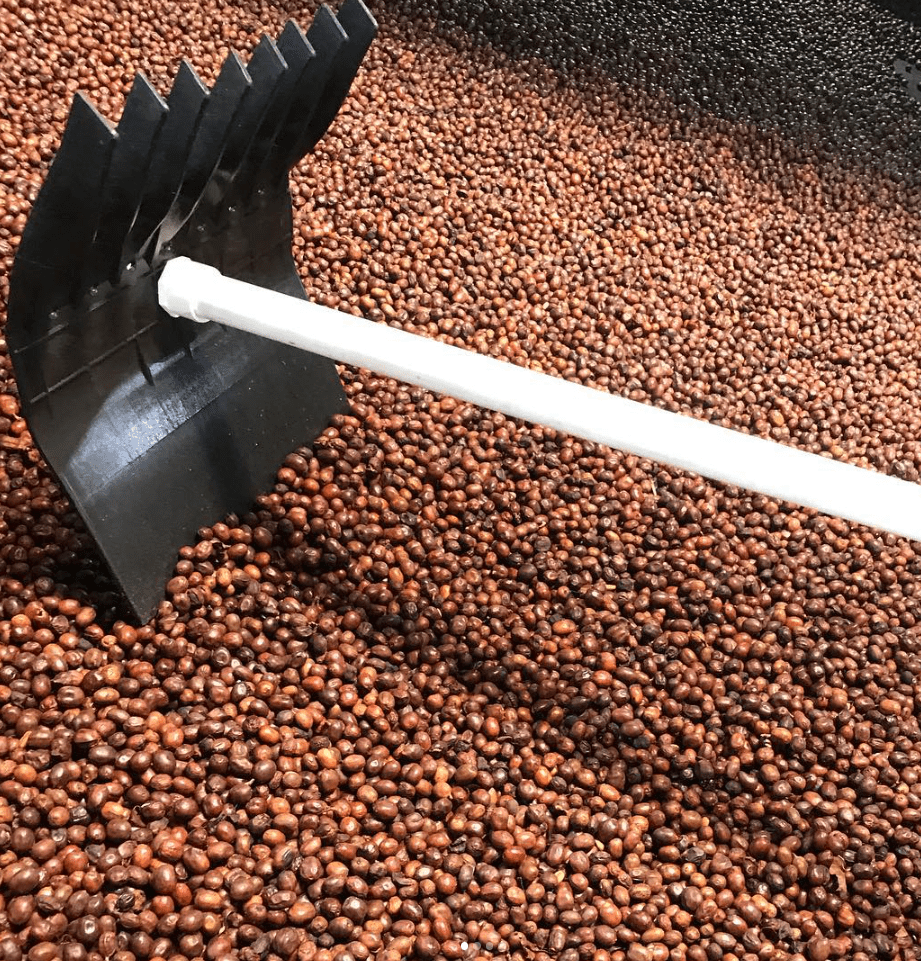
Once fermentation is complete, the coffee is dried in a mechanical silo for 30 hours, with temperatures carefully controlled below 50°C to ensure stability and consistency.