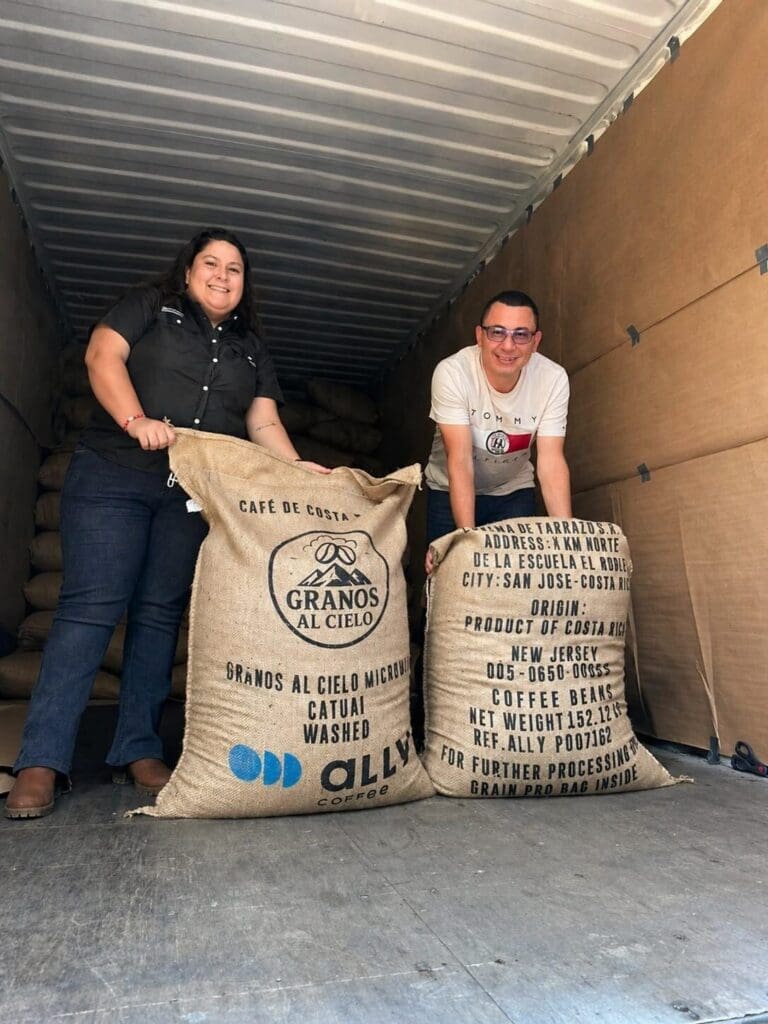
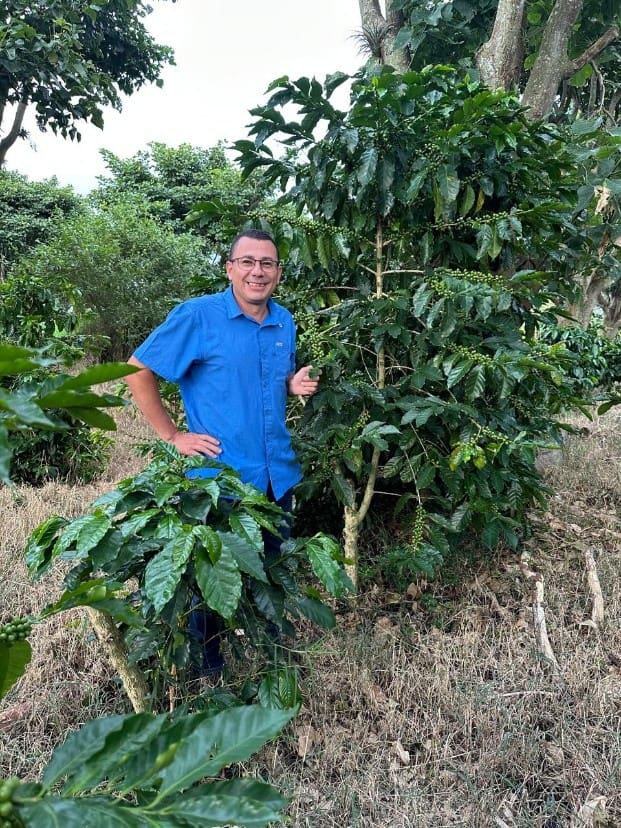
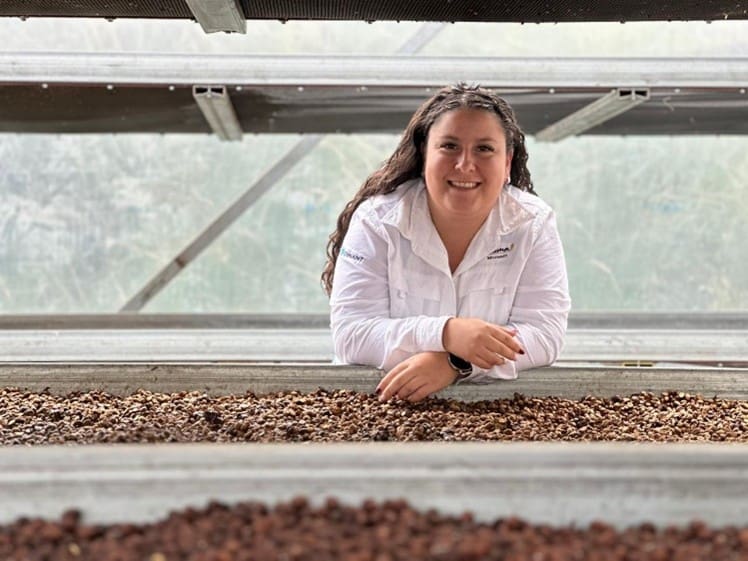
Granos al Cielo is a project led by Hazel Arias and Nelsyn Hernández, built on a combination of family legacy and technical experience. Located in Tarrazú, the project brings together a generational connection to coffee farming with a focus on process development and quality improvement.
For Hazel, coffee is rooted in her upbringing. Raised in a coffee-producing family, she developed an early understanding of the discipline and consistency required in production. Her perspective is grounded in preserving that legacy while continuing to build on it. Nelsyn complements this foundation with industry experience, contributing technical knowledge, market awareness, and a structured approach to quality.
Together, they have invested in their farms to strengthen production practices, refine post-harvest processes, and develop coffees with a clearer identity. Granos al Cielo reflects this transition, from traditional production toward a more intentional and quality-driven model.
The project focuses on maintaining consistency, improving traceability, and building long-term value through collaboration and continuous learning. It represents an ongoing effort to align origin practices with market expectations while staying connected to the roots that define their work.
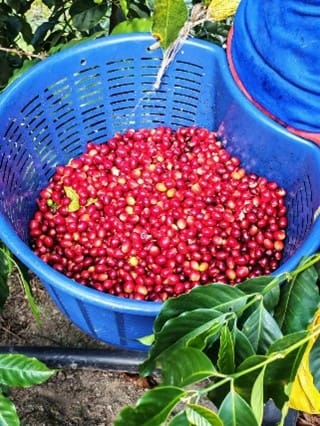
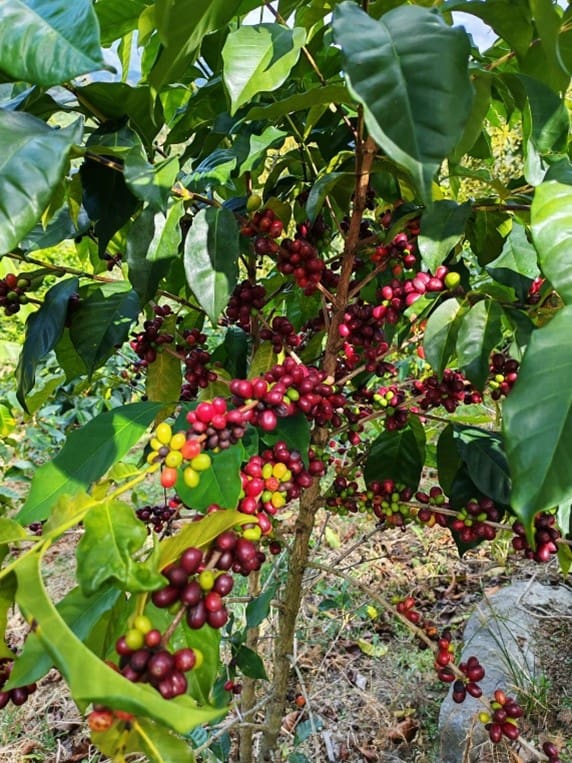
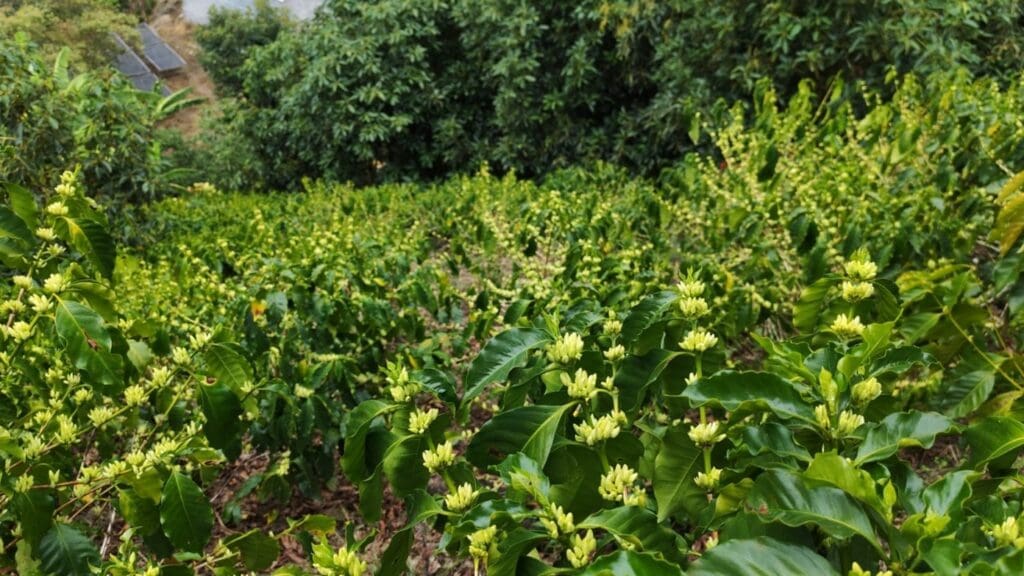
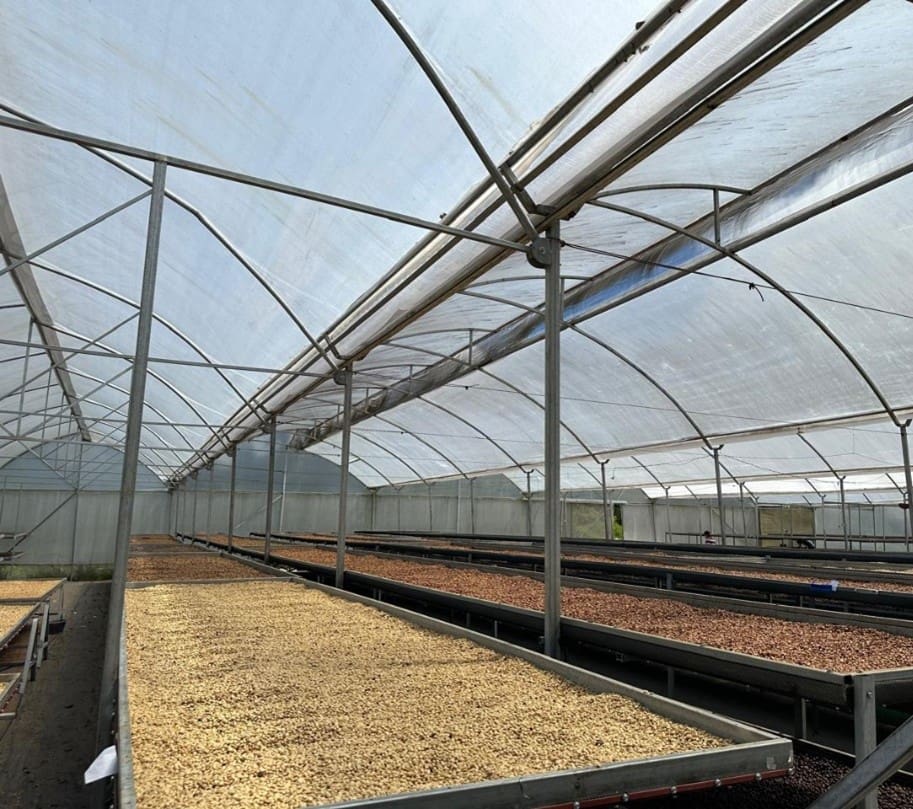
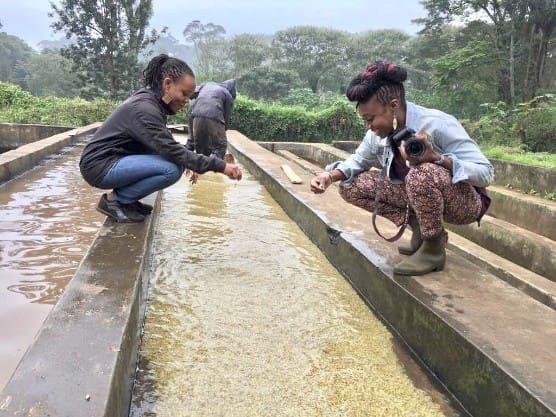
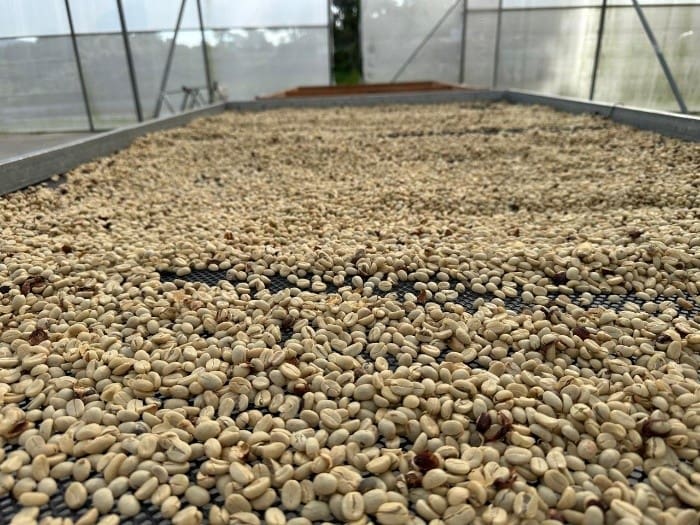
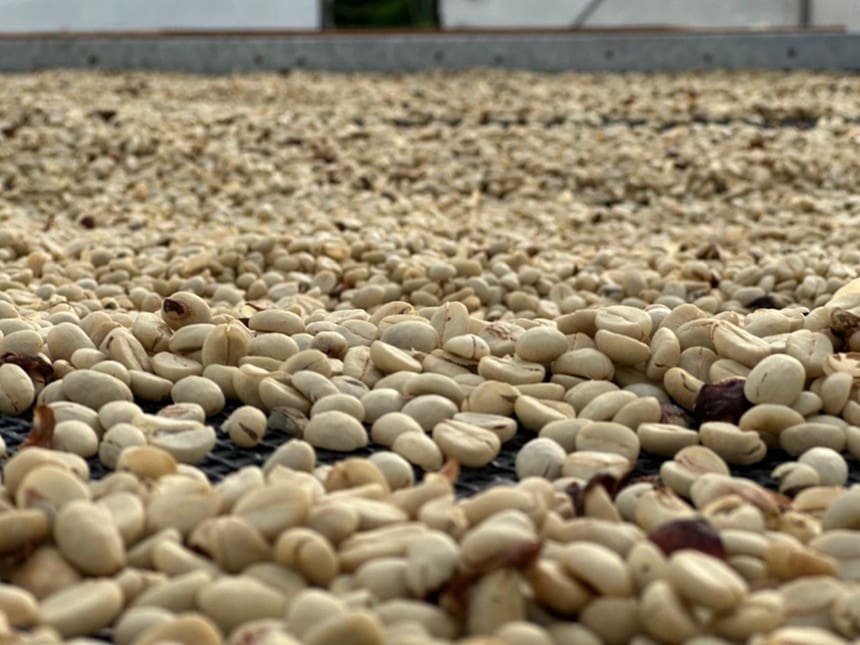
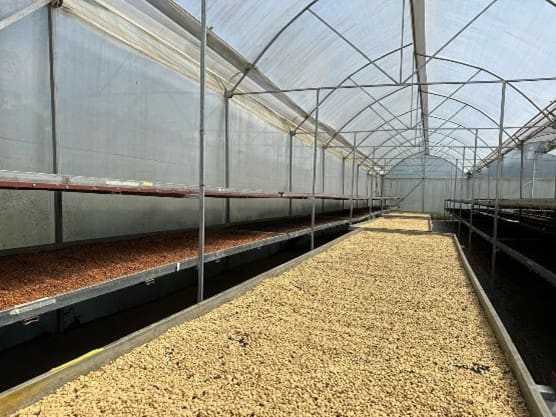
This Catuaí coffe underwent traditional washed method. Harvest begins with the selective picking of fully ripe cherries, ensuring optimal sugar content and uniformity. The cherries are then received in collection tanks, where they undergo washing and density sorting, including flotation and impurity removal, to separate defects and foreign material. Following this, the coffee is depulped and mechanically demucilaged using a small-scale, artisanal water channel system. This stage removes the remaining mucilage while maintaining control over water flow and movement. The clean parchment is then dried on raised African beds for approximately 8 days, allowing for even airflow and gradual moisture reduction. Once the target moisture is reached, the coffee is stored in jute bags lined with GrainPro, where it rests for 22 days. This stabilization period supports moisture equilibrium and preserves cup quality prior to export. Finally, the coffee is milled and prepared for export under controlled conditions.